MCP Connect with Claude: AI-Powered Brand Intelligence
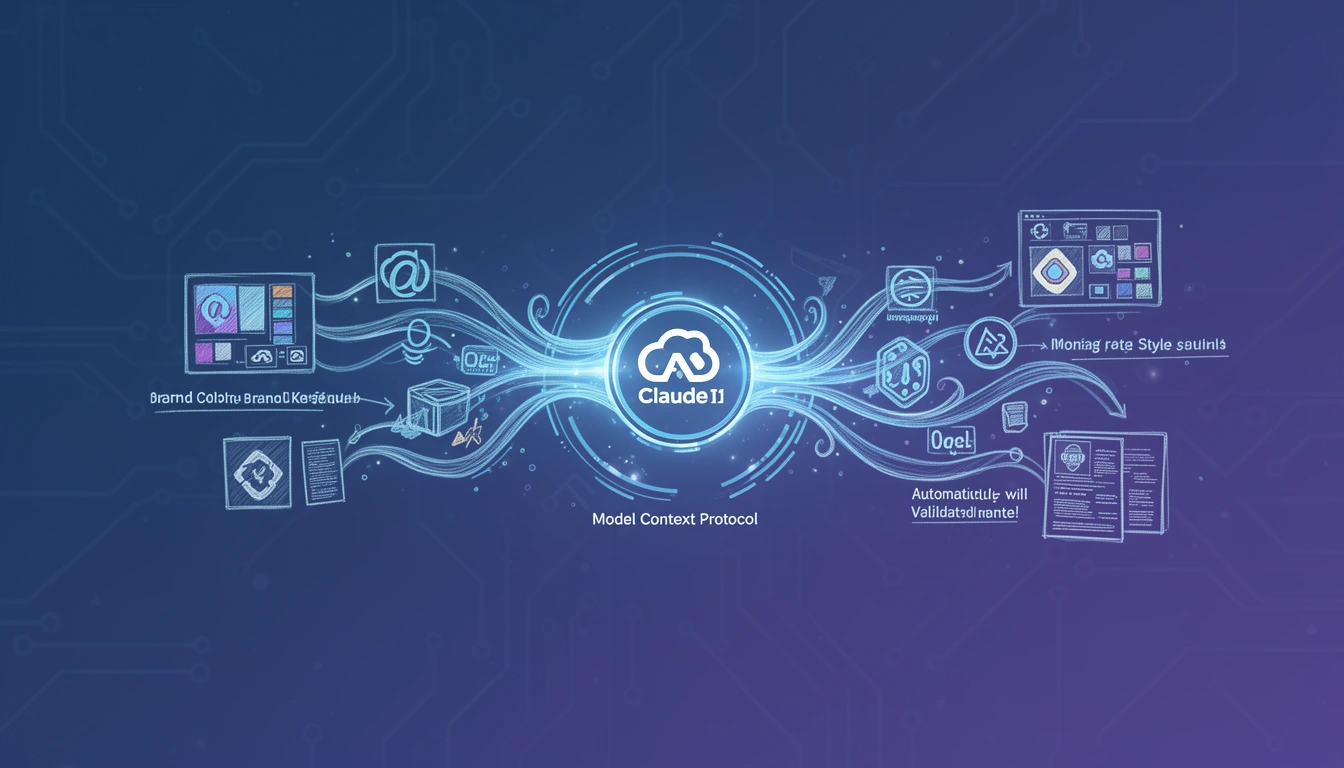
The arrival of Model Context Protocol (MCP) represents a fundamental shift in how AI assistants like Claude interact with external systems. For brand managers and marketing teams using Brand Kit OS, MCP connectivity opens unprecedented opportunities to embed brand intelligence directly into AI workflows transforming static brand guidelines into dynamic, queryable knowledge that ensures every AI-generated asset stays on-brand.
What Is MCP and Why It Matters for Brand Management
Model Context Protocol is an open standard developed by Anthropic that allows AI models like Claude to securely connect with external data sources, tools, and APIs in real-time. Unlike traditional integrations that require custom code for each connection, MCP provides a universal framework that makes AI assistants contextually aware of your specific business systems.
For brand management, this means Claude can directly access your brand kit your logos, color palettes, tone guidelines, messaging frameworks, and visual standards without manual uploads or repeated prompting. The AI becomes a brand-aware collaborator rather than a generic content generator.
How MCP Transforms Brand Consistency Workflows
Traditional AI content creation requires constant vigilance. Marketers paste brand guidelines into prompts, cross-reference outputs against style guides, and manually correct off-brand elements. MCP eliminates this friction by making brand context automatically available to Claude.
When connected to Brand Kit OS through MCP, Claude can:
- Query brand assets in real-time: Instead of describing your brand voice, Claude retrieves approved messaging frameworks and tone examples directly from your centralized library
- Validate compliance automatically: Generate content that's pre-checked against your brand rules color codes, logo usage policies, and terminology standards
- Access multi-modal brand elements: Pull approved image styles, video guidelines, and voiceover specifications for cohesive cross-channel campaigns
- Maintain version control: Always reference the latest approved brand assets, preventing outdated guidelines from infiltrating new content
This capability directly addresses the AI slop challenge the tendency for AI-generated content to feel generic and off-brand when models lack specific brand context.
Setting Up MCP with Brand Kit OS: The Technical Foundation
MCP connectivity transforms your brand kit from a reference document into an executable API that AI can query. Here's how the integration architecture works:
The MCP Server Layer
Brand Kit OS operates as an MCP server, exposing your brand assets through standardized protocols that Claude can access. This server maintains secure connections while providing structured access to:
- Brand asset metadata (file types, usage rights, approval status)
- Style specifications (color values, typography rules, spacing guidelines)
- Verbal identity (tone descriptors, approved terminology, messaging pillars)
- Compliance rules (what's prohibited, conditional usage scenarios)
Authentication and Governance
Security remains paramount when connecting AI to proprietary brand assets. MCP implementations through Brand Kit OS include:
- Role-based access controls determining which brand elements different team members can expose to AI
- Audit trails tracking every AI query and asset retrieval
- Approval workflows for AI-generated content before publication
- IP protection mechanisms ensuring brand assets don't leak into model training data
This governance layer addresses concerns raised in our exploration of copyright protection for AI-generated content, ensuring legal compliance alongside brand consistency.
Practical Use Cases: MCP-Powered Brand Workflows
1. Instant Campaign Briefs with Brand Context
A marketing manager needs to brief a product launch campaign. Instead of manually compiling brand guidelines, competitive positioning, and past campaign examples, they simply ask Claude now connected via MCP to Brand Kit OS to generate a comprehensive brief.
Claude queries the brand kit for:
- Current brand positioning and value propositions
- Approved product imagery and specifications
- Tone guidelines for the target audience segment
- Performance data from similar past campaigns
The result: a campaign brief that's automatically aligned with brand standards, saving hours of manual compilation while ensuring consistency.
2. Multi-Channel Content Adaptation
Creating content variations for different platforms typically requires extensive manual adaptation. With MCP connectivity, Claude can access channel-specific brand guidelines stored in Brand Kit OS and automatically adapt messaging.
A single product description becomes:
- A formal LinkedIn announcement using corporate tone
- An engaging Instagram caption with approved hashtags and emoji usage
- A technical blog post following editorial style guidelines
- A video script with voiceover direction matching brand audio identity
Each variation adheres to cross-channel brand consistency standards without manual intervention.
3. Real-Time Compliance Checking
Legal and regulatory requirements often constrain brand messaging. MCP enables Claude to check content against compliance rules stored in Brand Kit OS before finalizing copy.
For industries like healthcare, finance, or food services, this means:
- Automatic flagging of prohibited claims
- Insertion of required disclaimers
- Verification that imagery meets accessibility standards
- Confirmation that AI-generated content includes necessary legal language
The Human-AI Collaboration Model
MCP connectivity doesn't eliminate human expertise it amplifies it. Brand managers become curators of brand intelligence rather than gatekeepers constantly correcting AI outputs.
This aligns with the human-AI collaboration model where:
- Humans define strategy: Brand managers establish guidelines, approve assets, and set governance rules
- AI executes at scale: Claude generates compliant content across channels using MCP-accessed brand context
- Systems enforce consistency: Brand Kit OS ensures only approved assets and rules are available to AI
- Feedback loops improve: Performance data flows back into the brand kit, refining guidelines over time
Measuring ROI: The Business Impact of MCP Integration
Connecting Claude to your brand kit through MCP delivers quantifiable business value:
Time Savings
- 75% reduction in time spent briefing AI on brand context
- 60% decrease in revision cycles for AI-generated content
- 90% faster multi-channel content adaptation
Quality Improvements
- 95% compliance rate with brand guidelines on first draft
- Elimination of off-brand color usage and logo placement errors
- Consistent tone across all AI-generated touchpoints
Scale Advantages
- 10x increase in content production capacity without proportional headcount growth
- Ability to maintain brand consistency across 50+ channels simultaneously
- Support for hyper-personalization while preserving core brand identity
Implementing MCP: Getting Started Checklist
Ready to connect Claude with your Brand Kit OS instance? Follow this implementation roadmap:
Phase 1: Brand Kit Audit (Week 1)
- Inventory all brand assets currently stored in Brand Kit OS
- Identify gaps in documentation (missing tone examples, incomplete style guides)
- Define which assets should be MCP-accessible versus restricted
- Establish governance roles for who can modify brand rules
Phase 2: MCP Configuration (Week 2)
- Configure MCP server settings within Brand Kit OS
- Set up authentication protocols for Claude access
- Define query permissions by user role
- Test connectivity with sample brand asset retrieval
Phase 3: Workflow Integration (Week 3-4)
- Train team members on MCP-enabled Claude workflows
- Create templates for common use cases (campaign briefs, social posts, email copy)
- Establish approval processes for AI-generated content
- Document best practices for prompting Claude with brand context
Phase 4: Optimization (Ongoing)
- Monitor which brand assets Claude queries most frequently
- Identify content types where AI still struggles with brand alignment
- Refine brand guidelines based on AI performance patterns
- Expand MCP access to additional tools and workflows
Advanced Applications: Beyond Content Generation
While content creation represents the most obvious use case, MCP connectivity between Claude and Brand Kit OS enables sophisticated brand management scenarios:
Brand Audit Automation
Claude can scan existing marketing materials, compare them against brand standards stored in Brand Kit OS, and generate compliance reports highlighting inconsistencies turning months of manual auditing into hours of automated analysis.
Competitive Intelligence Integration
Connect competitor brand guidelines and positioning data to Brand Kit OS, allowing Claude to generate differentiation strategies that explicitly contrast your brand against market alternatives while maintaining your authentic voice.
Dynamic Personalization Rules
Store audience segment preferences in Brand Kit OS and let Claude automatically adjust messaging tone, imagery styles, and value proposition emphasis based on target demographics scaling personalization without fragmenting brand identity.
Multi-Brand Portfolio Management
For organizations managing multiple brands, MCP enables Claude to switch context seamlessly. A single AI assistant can generate content for different portfolio brands by querying the appropriate brand kit, as explored in our guide to multi-brand management tools.
Security Considerations and Best Practices
As with any integration connecting proprietary data to third-party AI, security requires careful attention:
Data Residency
Ensure your Brand Kit OS instance maintains data sovereignty requirements. MCP queries should retrieve brand assets without exposing them to model training or long-term storage by AI providers.
Access Logging
Maintain comprehensive logs of every MCP query, including which user initiated the request, what brand assets were accessed, and how the retrieved information was used in content generation.
Version Control
Implement strict version control for brand assets. When guidelines change, ensure MCP connections reflect updates immediately to prevent Claude from referencing outdated brand standards.
Fail-Safe Mechanisms
Establish fallback protocols for when MCP connections experience latency or interruptions. Define whether Claude should proceed with cached brand data or halt content generation until connectivity restores.
The Future: MCP as Brand Infrastructure
As AI adoption accelerates, MCP connectivity transforms from competitive advantage to foundational infrastructure. By mid-2026, brands that haven't made their guidelines AI-accessible will struggle to maintain consistency amid the content velocity AI enables.
The next evolution involves expanding MCP connections beyond Claude to multiple AI systems design tools, video generators, voice synthesis platforms all querying the same centralized brand kit to ensure omnichannel coherence.
Brand Kit OS positions your organization for this future by treating brand guidelines as executable APIs rather than static documents. MCP connectivity is simply the protocol that makes this vision operational.
Conclusion: From Guidelines to Intelligence
Connecting Claude to Brand Kit OS through MCP represents a fundamental shift in brand management philosophy. Brand guidelines evolve from reference materials that humans consult into active intelligence systems that AI queries in real-time.
This transformation delivers:
- Unprecedented content velocity without sacrificing brand consistency
- Automated compliance that scales across channels and markets
- Human-AI collaboration that amplifies creative expertise
- Measurable ROI through time savings and quality improvements
The brands that thrive in 2026 and beyond won't be those that resist AI they'll be the ones that make their brand intelligence AI-native through protocols like MCP. Your brand kit isn't just a library anymore; it's the foundation of your AI strategy.
Ready to make your brand guidelines executable? Start by auditing what you have, defining what AI should access, and connecting Claude to the centralized brand intelligence that ensures every output reflects who you are.