Close the LLM Visibility Gap: Why Your Brand Isn't Understood
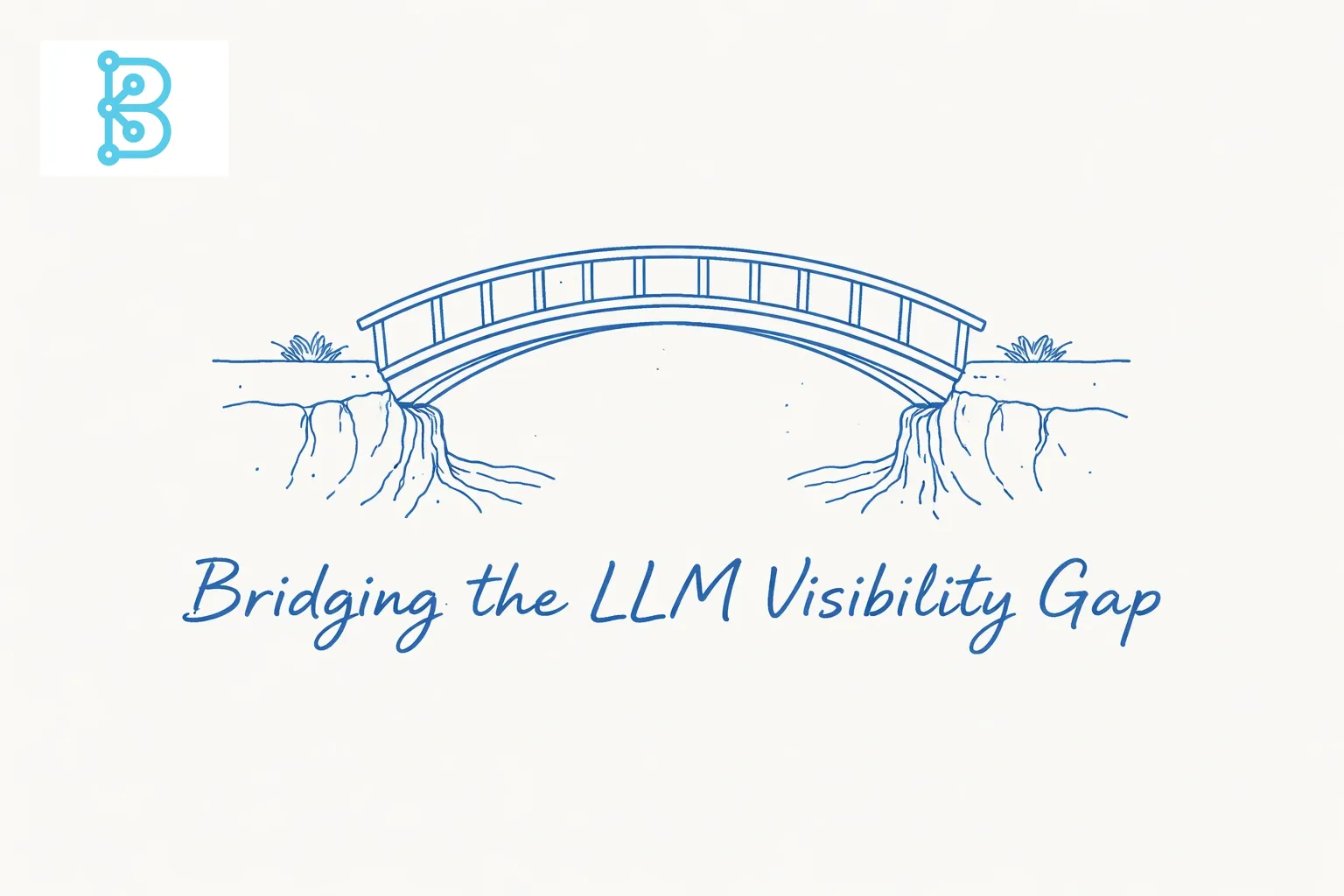
Your brand ranks number one on Google for its own name. Yet ask ChatGPT, Claude, or Perplexity who you are, and you get vague guesses, outdated facts, or silence. This is the LLM visibility gap the difference between ranking well and actually being understood.
That gap matters more every month. In July 2026, AI answer engines increasingly sit between your brand and your customer, summarizing, recommending, and sometimes fabricating who you are. If your brand data isn't structured for machines to read, you're invisible in the exact conversations where buying decisions happen.
What Is the LLM Visibility Gap
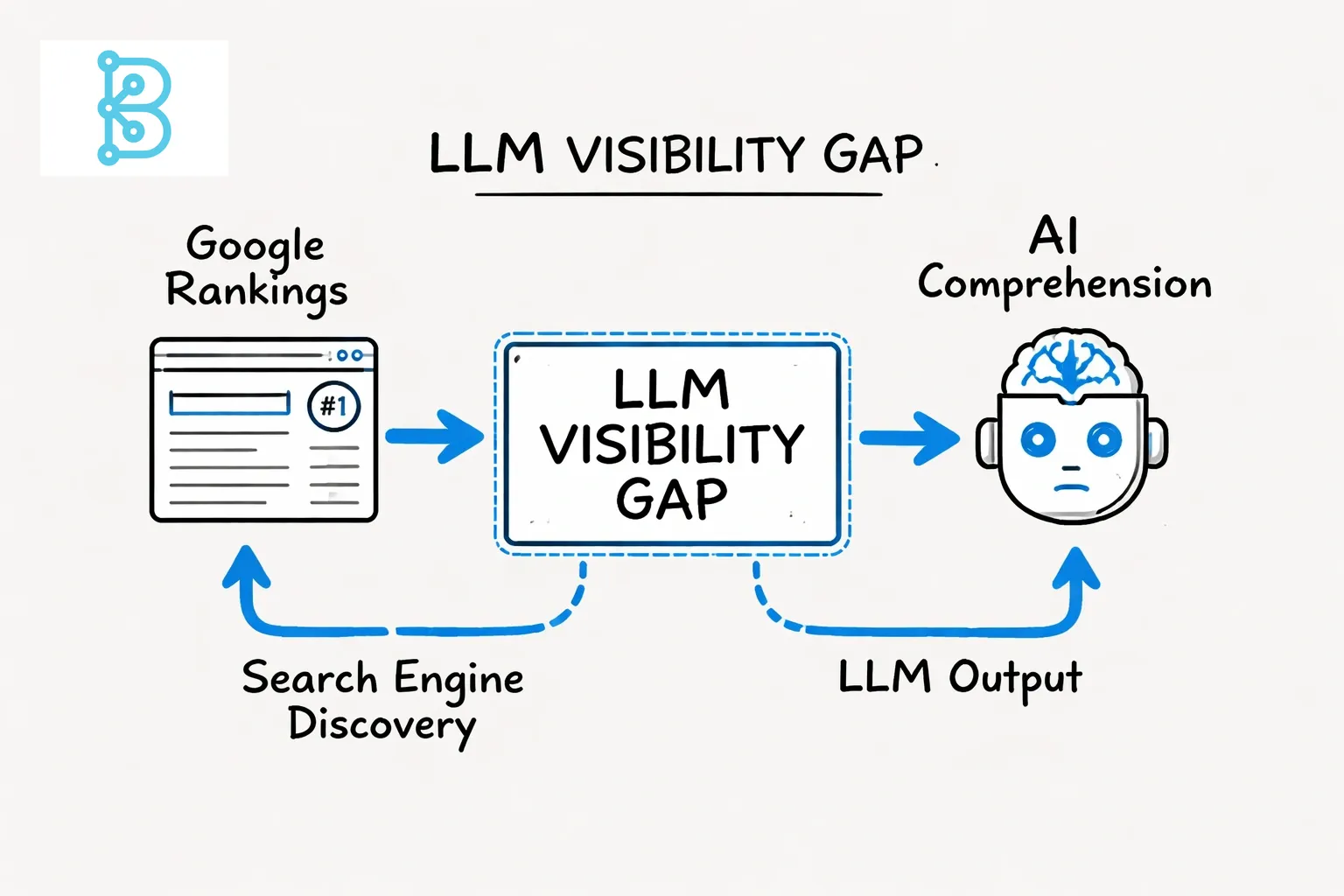
The LLM visibility gap is the disconnect between search engine rankings and AI representation. A site can dominate page one on Google while an AI assistant feeds users incomplete or wrong information. Rankings measure discoverability. LLM outputs measure comprehension.
Search engines and LLMs work differently under the hood. Google crawls, indexes, and ranks pages using links and authority signals. LLMs like GPT, Claude, and Gemini generate answers by pattern-matching across training data and retrieval systems, then writing a response in natural language. There's no "position one" for an AI answer there's just whatever the model decides to say, based on whatever fragments of your brand it absorbed correctly.
Here's the uncomfortable part: LLMs don't read your website the way a human does. They pull from scattered training snippets, secondhand mentions, outdated crawls, and sometimes competitor content. If your voice, positioning, and facts aren't stated clearly and consistently everywhere, the model fills gaps with guesses. Those guesses become what millions of users hear about you.
Why Google Rankings Don't Translate to AI Answers
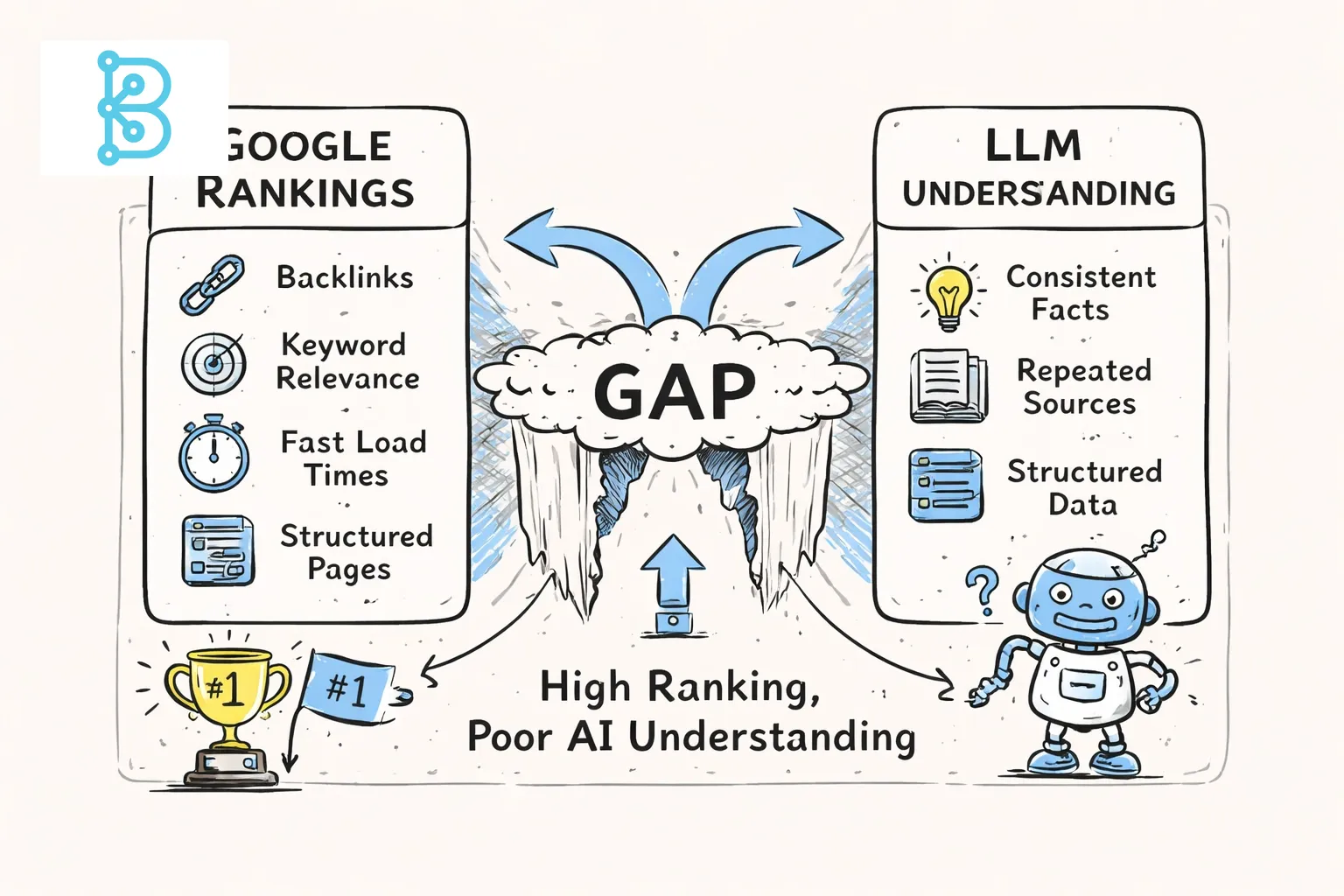
Google rankings measure link authority and keyword relevance, not factual understanding. A brand can rank well through backlinks and technical SEO while still being poorly understood by a language model.
Think about how differently the two systems reward content. Google rewards structured pages, fast load times, and strong backlink profiles. You can rank high with a page that's technically optimized but thin on substance. LLMs reward repetition of consistent facts across many sources. If your website says one thing, your LinkedIn says another, and a five-year-old press release says something else, the model has no clean signal to anchor on.
This is why brands with strong domain authority still get flattened or ignored in AI answers. The model isn't ranking your page it's trying