AI Era Brand Risk: Norwegian Air's Viral Tail Fin Insights
Norwegian Air put famous Norwegians on their tail fins. It was a bold move distinctive, a bit provocative, and definitely not boring. It got people talking. But in 2026, "getting people talking" means something different than it used to.
When that design hit the internet, it didn't just get shared. It got scraped. Within hours, AI tools were reproducing it, remixing it, and stripping the context away. The airline's bet is a useful case study for what happens to any distinctive brand asset once AI-powered distribution gets involved.
What actually happened
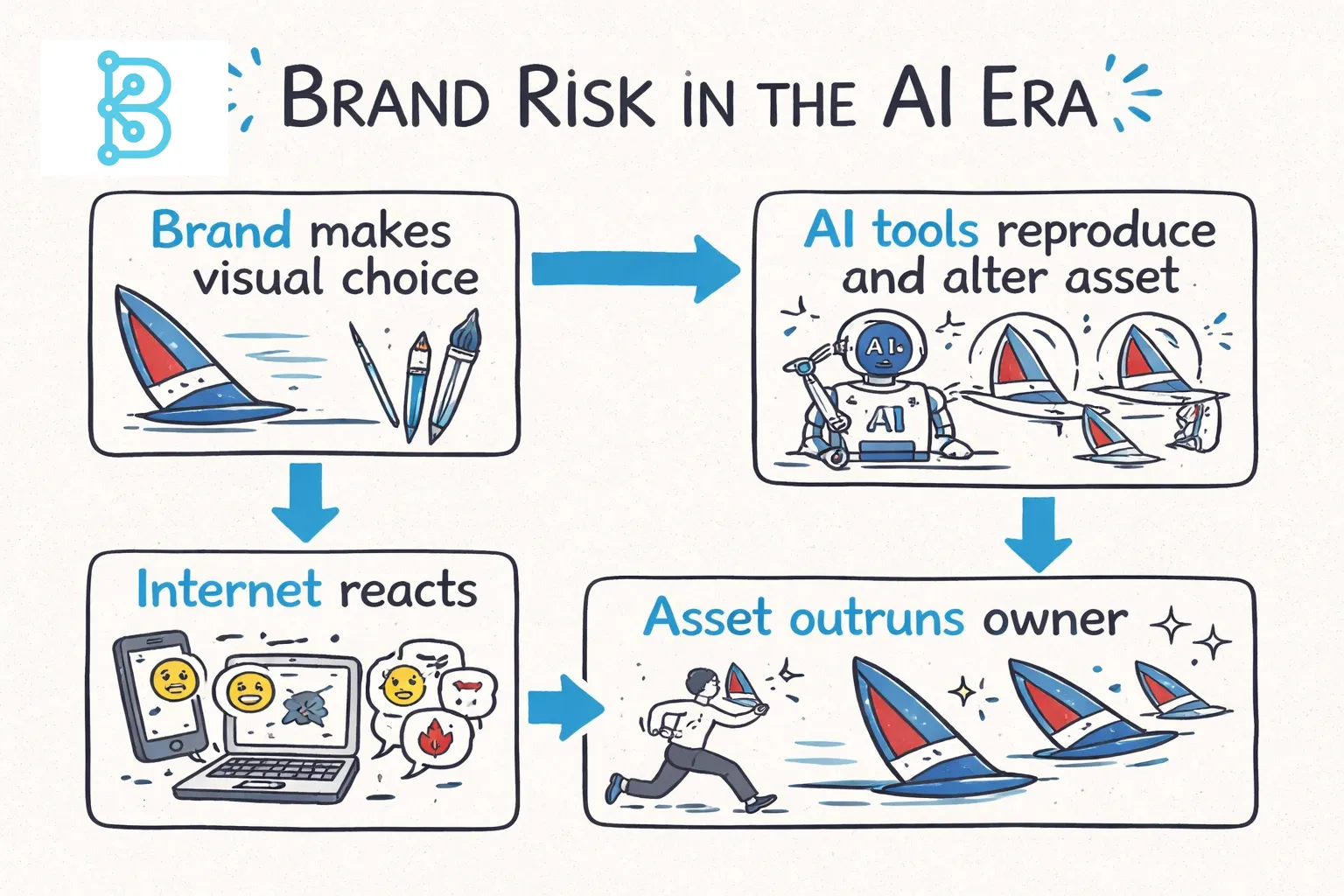
The tail-fin artwork courted controversy. That was the point. But that distinctiveness is exactly what made it ripe for AI digestion. A brand chooses to stand out. The internet reacts. Then AI tools start reproducing and altering the asset faster than any human team can issue a takedown notice.
The airline is just the prompt. The story is the pattern: Brand makes visual choice. Algorithms amplify it. Asset outruns owner.
Why viral bets are riskier now
Viral brand moments used to be manageable. You'd ride the wave or manage the fallout for a news cycle. Now, the risk compounds. Generative AI can replicate and distort an asset within minutes of it going live.
What used to take a design agency weeks mocking up a parody or a variant takes a chatbot seconds. You end up with unofficial variants, deepfake spokespeople, and remixed taglines circulating before your marketing team has finished their morning coffee. We wrote about this dynamic in our piece on AI-generated content brand consistency in 2026. The velocity problem is now a governance problem.
The anatomy of brand risk
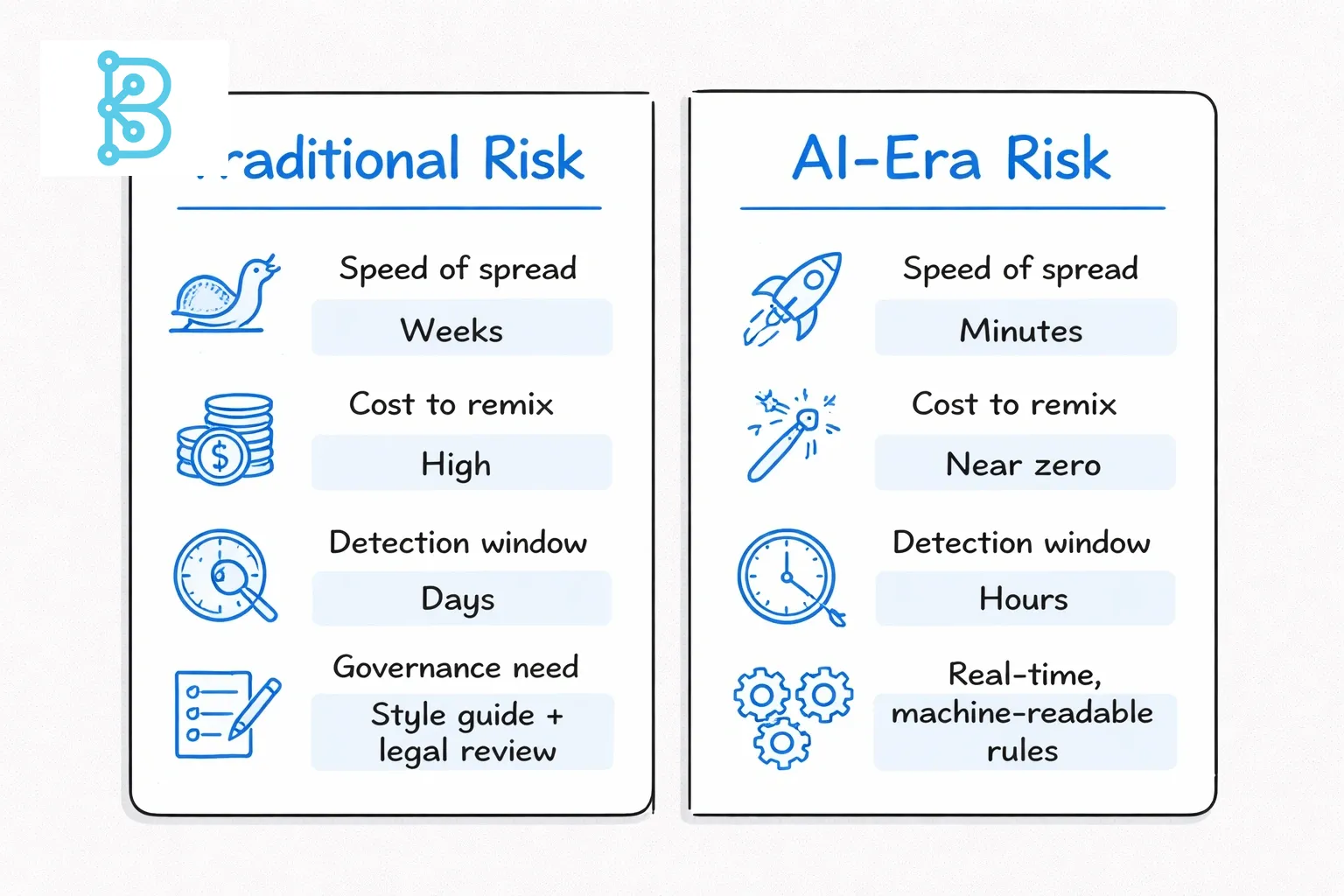
Three things matter: speed, scale, and distortion. Speed is how fast it spreads (minutes, not weeks). Scale is how many touchpoints it hits (anyone with a prompt, not just partners). Distortion is how far the reproduction drifts from the original.
| Dimension | Traditional Risk | AI-Era Risk |
|---|---|---|
| Speed of spread | Weeks (press cycle) | Minutes (algorithmic) |
| Who controls it | Agencies, partners | Anyone with a prompt |
| Cost to remix | High (skill required) | Near zero |
| Detection window | Days | Hours |
| Governance need | Style guide + legal review | Real-time, machine-readable rules |
Growth teams running AI content pipelines deal with this weekly. Our resource for growth teams explains that automated output needs structured brand data feeding every generation, not just a PDF in a shared drive.
How governance prevents drift
You can't stop AI from generating images. You can stop it from generating your images incorrectly. This is where the gap between a "beautiful PDF" and an "executable brand system" becomes obvious.
A static brand guide can't stop a generative model from hallucinating a new version of your logo. A structured brand kit essentially an API for your visual identity can be referenced by the AI pipelines your team is using. That's the argument for treating a brand kit as an API.
The basics usually include locked parameters that flag off-spec colors or shapes instantly, negative directories (lists of things the brand should never do), drift prevention prompts in your generation workflows, and human review for anything the system flags as risky.
This doesn't eliminate virality. It just means you control the version that wins the algorithm, rather than leaving it to chance.
Building a brand risk playbook
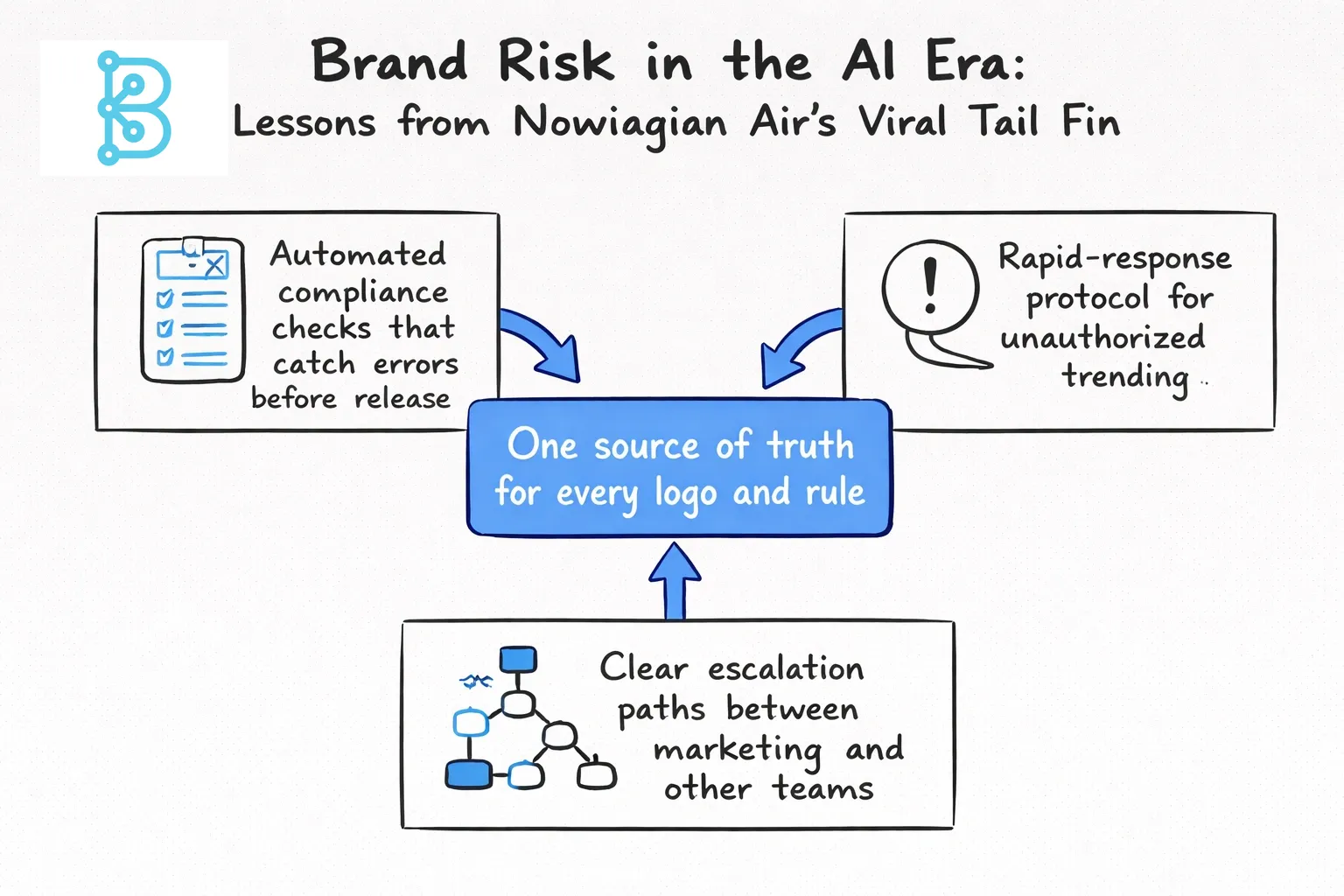
If you're waiting for a crisis meeting to respond to a viral asset, you're too slow. You need a playbook that lets you move in hours, not weeks.
This pressure is highest for agencies managing multiple clients with different risk tolerances. Our guide for agencies covers how to centralize rules so no single person becomes the bottleneck during a fast-moving moment.
A decent playbook needs one source of truth for every logo and rule, automated compliance checks that catch errors before they go out, a rapid-response protocol for unauthorized trending, clear escalation paths between marketing and legal, and a post-incident review process. Even consultants advising smaller brands need to think about this. Our resource for consultants outlines how to put lightweight governance in place without killing creative speed.
Turning risk into ROI
Governance is often treated as a cost center. That misses the bigger picture. Consistent, protected assets compound in value every time they're used correctly. One mishandled viral moment logo drift, a deepfake gone wrong can cost more in cleanup than years of governance tooling.
That's the difference between reactive firefighting and proactive brand management, a distinction we explore in our glossary of brand governance terms.
Look at your content calendar. Without governance, every AI post needs a manual review and viral moments catch you off guard. With governance, AI tools reference your brand data automatically and risky outputs get flagged before they publish.
If you're evaluating platforms, you might compare options like Frontify against AI-native alternatives built for governance at generation speed, not just asset storage.
What this means for you
You might not be putting historians on a tail fin, but you're taking a version of that bet every time you put something distinctive out there. Attention travels through systems you don't control.
The winners aren't the ones avoiding risk. They're the ones with governance strong enough to survive the moment their asset goes viral. That starts with knowing your exposure. Check how your current setup would hold up under AI-scale distribution by reviewing our security practices and FAQ.
The safest move in 2026 isn't playing it small. It's making sure the version of your brand that goes viral is the one you actually approved.