Prompting Best Practices for Brand Consistency in 2026
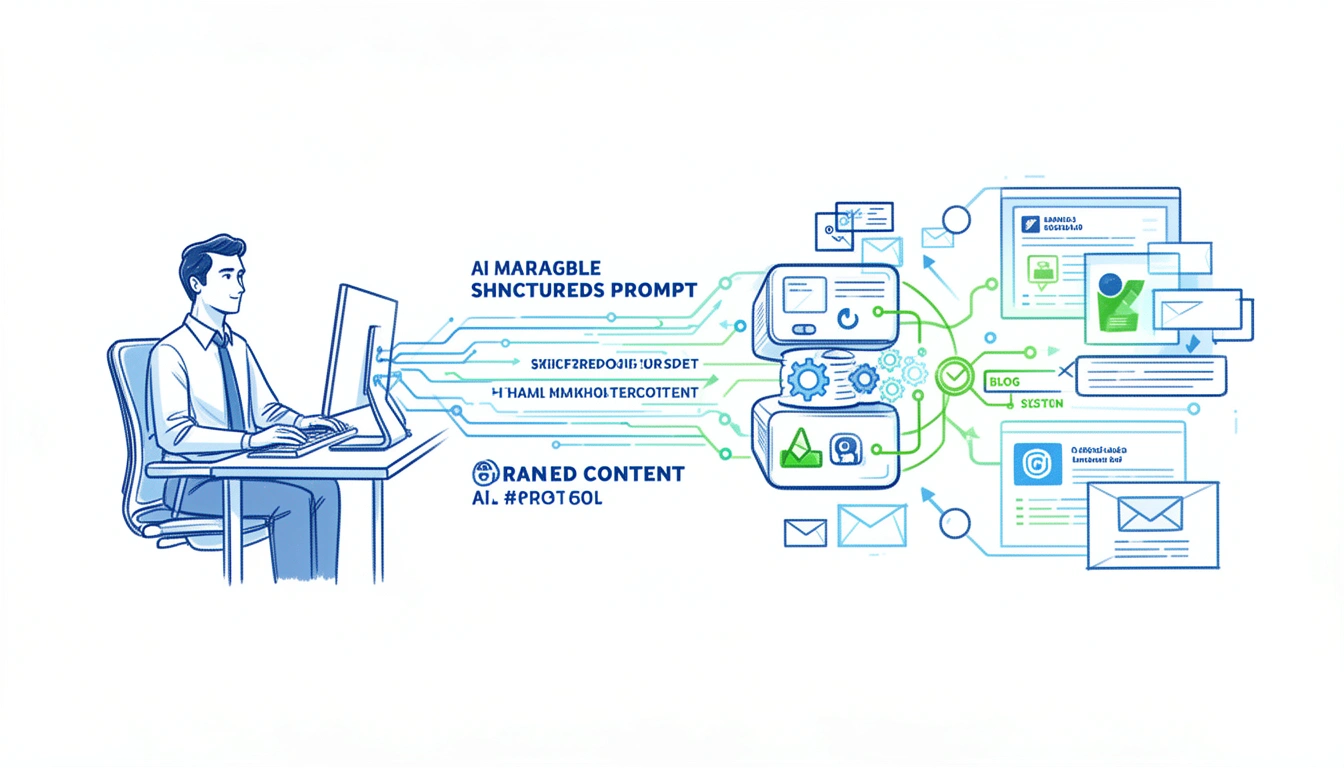
The quality of AI-generated brand content depends entirely on the quality of your prompts. As brands scale content production with AI in 2026, mastering prompt engineering has become a core competency not just for technical teams, but for every marketer, designer, and brand manager using generative tools.
Poor prompts produce generic outputs that dilute brand identity. Strategic prompts unlock AI's potential to generate content that's both on-brand and differentiated. Here's how to structure prompts that consistently deliver brand-aligned results.
Why Prompting Matters More Than Ever
With AI tools generating everything from social posts to product descriptions at unprecedented velocity, the prompt has become the control mechanism for brand consistency. Generic prompts yield generic content the dreaded "AI slop" that floods digital channels with homogenized messaging.
Effective prompting transforms AI from a content mill into a brand amplification engine. When done right, prompts encode brand guidelines, tone preferences, and strategic positioning directly into AI outputs, ensuring every piece reinforces your brand identity rather than eroding it.
The stakes are high: brands using AI without prompt discipline risk losing their distinctive voice in a sea of algorithmically similar content. Those who master prompting gain velocity without sacrificing brand integrity.
The Anatomy of a Brand-Aligned Prompt
High-performing prompts follow a consistent structure that provides AI with the context, constraints, and direction needed to generate on-brand content.
1. Role and Context
Start by establishing the AI's role and the business context. This frames the output appropriately for your brand and audience:
"You are a brand copywriter for [Brand Name], a [industry/category] company that [unique value proposition]. Our audience is [target demographic] who value [key customer values]."
This foundation ensures the AI understands who it's writing for and what perspective to adopt.
2. Brand Voice and Tone Parameters
Explicitly define your brand's voice characteristics. Don't assume AI will infer these correctly:
"Our brand voice is [adjective 1], [adjective 2], and [adjective 3]. We sound like [comparison] but never like [counter-example]. We use [specific language patterns] and avoid [forbidden phrases or styles]."
Include concrete examples when possible. Instead of "friendly," specify "conversational and approachable, using 'you' language and contractions, but maintaining professional credibility."
3. Task Specification
Clearly articulate what you need the AI to create, including format, length, and structural requirements:
"Create a [content type] that [specific objective]. The output should be [word count/format specifications] and include [required elements]."
Precision here prevents iterative revisions and wasted generation cycles.
4. Brand Constraints and Guidelines
Specify non-negotiable brand rules that govern output:
"Must follow these brand guidelines: [specific rules about terminology, prohibited language, required disclaimers, visual descriptions, etc.]. Never use [banned terms]. Always include [required elements]."
This is where your centralized brand guidelines become executable instructions for AI systems.
5. Examples and References
Provide representative samples of on-brand content as references:
"Here are examples of our best-performing content in this category: [examples]. Match this quality and style while creating something original."
Examples dramatically improve output quality by giving AI concrete patterns to emulate rather than abstract descriptions to interpret.
Advanced Prompting Techniques for Brand Consistency
Chain-of-Thought Prompting
For complex brand content requiring strategic thinking, use chain-of-thought prompting to guide AI through your brand's reasoning process:
"Before writing, first: 1) Identify the customer pain point we're addressing, 2) Determine which brand value is most relevant, 3) Select the tone that fits this context, 4) Choose supporting proof points from [source]. Then write the content based on this analysis."
This technique ensures AI considers brand strategy before generating surface-level content.
Constrained Creativity Prompts
Balance creativity with brand compliance by setting boundaries that encourage innovation within guardrails:
"Generate 5 creative variations that explore different angles while maintaining [specific brand attributes]. Each should feel distinctly different in approach but unmistakably [Brand Name] in voice."
This approach prevents AI slop while still leveraging AI's generative capabilities.
Multi-Modal Prompting
When generating content that spans text, visuals, and other formats, coordinate prompts across modalities:
"Create social media content including: [copy specifications referencing brand voice], [image description referencing brand visual style and color palette], [hashtag strategy aligned with brand themes]."
Integrated prompts ensure cross-channel brand consistency rather than fragmented outputs that feel disjointed.
Iterative Refinement Prompts
Build feedback loops into your prompting workflow:
"Review this draft against our brand guidelines and identify any inconsistencies with [specific brand elements]. Then revise to correct these issues while preserving the core message."
This self-review mechanism catches brand deviations before content reaches human reviewers.
Creating Reusable Prompt Templates
Don't reinvent prompts for every content request. Build a library of templates for common brand content types:
- Product Launch Announcement Template: Pre-loaded with brand voice, key messaging pillars, and required legal disclaimers
- Social Media Post Template: Includes platform-specific best practices plus brand tone guidelines
- Email Newsletter Template: Embeds brand storytelling structure and voice patterns
- Blog Introduction Template: Ensures consistent hooks that align with brand positioning
Template libraries accelerate content production while maintaining consistency across teams and use cases. When integrated with your brand management platform, these templates become living assets that update automatically when brand guidelines evolve.
Prompt Governance and Quality Control
As AI content generation scales, prompt quality becomes a governance issue. Establish processes to ensure prompt consistency across your organization:
Centralized Prompt Repository
Maintain a shared library of approved prompts that all team members can access and use. This prevents prompt drift where different teams develop incompatible approaches to AI content generation.
Prompt Performance Tracking
Monitor which prompts consistently produce on-brand outputs versus those requiring extensive revision. Refine underperforming prompts and document what makes successful prompts work.
Version Control
Track prompt iterations to understand how changes affect output quality. When brand guidelines update, cascade those changes to all relevant prompt templates to maintain alignment.
Human Review Checkpoints
Even the best prompts require human oversight. Define review criteria that evaluate both brand compliance and content effectiveness, using these insights to continuously improve prompt architecture.
Platform-Specific Prompting Considerations
Different AI platforms respond differently to prompting techniques. Optimize for the tools your team uses:
ChatGPT and GPT-4
Excels with detailed role-playing and context. Front-load brand context and use system messages for persistent brand guidelines across conversations.
Claude
Particularly effective with constitutional AI approaches. Frame brand guidelines as ethical constraints the AI should never violate. Claude Skills export capabilities allow you to encode brand guidelines as executable AI instructions.
Midjourney and DALL-E
For visual content, create prompts that reference specific brand colors (by hex code), visual styles, and compositional preferences. Include negative prompts to exclude off-brand visual elements.
Domain-Specific Models
When using specialized AI for copywriting, design, or other functions, adapt prompt structures to leverage model-specific capabilities while maintaining brand consistency across all outputs.
Common Prompting Mistakes That Erode Brand Consistency
Avoid these pitfalls that undermine brand integrity:
Vague Voice Descriptions: "Professional but friendly" means different things to different AI models and different people. Use concrete examples and specific language patterns instead.
Missing Context: AI doesn't know your brand history, competitive positioning, or strategic priorities unless you explicitly provide this context in prompts.
Overloading Single Prompts: Trying to accomplish too much in one prompt dilutes focus. Break complex content creation into sequential prompts that build on each other.
Ignoring Output Variability: AI outputs vary across generations. Test prompts multiple times and refine until they consistently produce on-brand results.
Static Prompts for Evolving Brands: As your brand evolves, your prompts must too. Regular prompt audits ensure alignment with current brand guidelines.
Integrating Prompts with Brand Management Systems
The most sophisticated approach treats prompts as extensions of your brand guidelines living instructions that draw from your centralized brand assets.
Modern dynamic brand guidelines software enables prompts to reference brand kits programmatically, pulling current voice guidelines, approved terminology, and brand values directly into AI instructions. This ensures prompts never drift out of sync with official brand standards.
When brand guidelines update, integrated systems automatically propagate changes to all associated prompts, maintaining consistency across every AI-generated asset without manual intervention.
The Future of Brand Prompting
As AI capabilities advance, prompting techniques will evolve from manual craft to automated systems. We're moving toward:
Self-Optimizing Prompts: AI that analyzes output performance and automatically refines prompts to improve brand alignment over time.
Multi-Agent Prompt Orchestration: Different AI agents handling specialized aspects of brand content creation, coordinated through master prompts that ensure coherent outputs.
Real-Time Brand Compliance: Prompts that trigger automatic checks against brand guidelines, flagging deviations before content is generated rather than after.
Personalization at Scale: Prompt systems that maintain brand consistency while adapting outputs for different audiences, channels, and contexts without manual customization.
Brands that build prompt engineering capabilities now will be positioned to leverage these advances as they emerge, maintaining competitive advantage through superior AI-driven content quality.
Start Prompting with Purpose
Effective prompting isn't about controlling AI it's about channeling its capabilities toward brand-aligned outcomes. Every prompt is an opportunity to reinforce your brand identity or dilute it.
Begin by auditing your current prompting practices. Identify where inconsistencies emerge and which content types would benefit most from standardized prompt templates. Build your prompt library incrementally, testing and refining as you scale.
The brands winning with AI in 2026 aren't necessarily using the most advanced models they're using the most strategic prompts. Master this foundational skill, and you transform AI from a commodity tool into a brand differentiation engine.