Multi-Brand Management Tool: Scale Brand Consistency
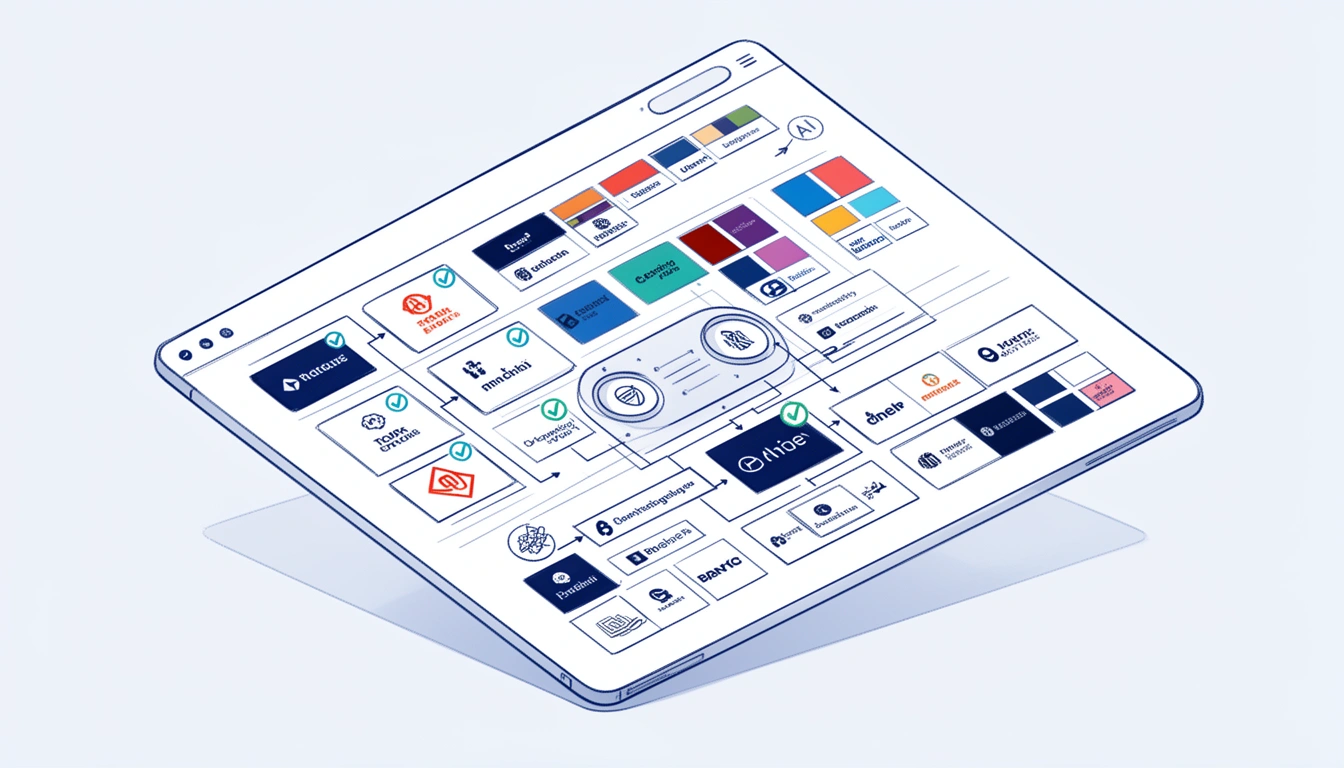
Managing multiple brands under one roof has become a defining challenge for agencies, holding companies, and enterprise organizations in 2026. Whether you're juggling sub-brands within a portfolio, managing client brands as an agency, or overseeing regional variations of a global brand, the complexity multiplies exponentially with each additional identity you steward.
Traditional brand management tools were built for single-brand scenarios. But when you're managing 5, 10, or 50+ brands simultaneously, you need a fundamentally different approach one that provides centralized control without sacrificing the unique identity of each brand.
The Multi-Brand Management Challenge in 2026
The explosion of AI-generated content has amplified the multi-brand management problem. Marketing teams now produce content at 10-20x the velocity they did just two years ago, creating unprecedented strain on brand governance systems.
Consider a typical scenario: A creative agency manages 15 client brands, each with distinct visual identities, tone guidelines, and compliance requirements. Every designer needs instant access to the correct brand kit, every AI tool needs the right guardrails, and every piece of content must meet brand-specific standards before publication.
The traditional approach separate folders, scattered guidelines, and manual checks breaks down completely at this scale. Brand confusion becomes inevitable, costly mistakes multiply, and teams spend more time searching for assets than creating value.
What Makes an Effective Multi-Brand Management Tool
Not all brand management platforms are equipped to handle multiple brands effectively. Here are the essential capabilities that distinguish true multi-brand systems from single-brand tools stretched beyond their limits:
1. Centralized Administration with Brand-Level Isolation
The best multi-brand tools provide a unified administrative dashboard while maintaining complete separation between brand assets and guidelines. This means:
Single login for team members across all brands
Centralized user management and permissions
Complete asset isolation no cross-contamination between brands
Brand-specific access controls and approval workflows
2. Scalable Brand Kit Architecture
Each brand needs its own complete kit logos, color palettes, typography, imagery style, voice and tone guidelines, and compliance rules. A proper multi-brand tool treats each brand kit as a discrete, executable system rather than just another folder.
This architectural approach enables automated brand compliance at scale, where AI can instantly validate content against the correct brand standards without human intervention.
3. AI-Native Governance Across All Brands
In 2026, multi-brand management without AI governance is like managing spreadsheets without formulas. The volume simply doesn't work manually anymore.
Leading platforms now treat brand guidelines as programmatic APIs that AI systems can query in real-time. When a designer generates content for Brand A, the AI automatically applies Brand A's rules. Switch to Brand B, and the governance framework instantly adapts.
This approach prevents the most common multi-brand failure mode: accidentally using Brand X's assets or tone in Brand Y's content. The system enforces cross-channel brand consistency automatically, flagging errors before they reach production.
4. Template and Workflow Reusability
While brand assets must remain separate, operational efficiency demands reusable workflows and templates. Smart multi-brand tools let you:
Create master templates adaptable to any brand's visual system
Define approval workflows once and deploy across multiple brands
Set up compliance checks that scale to all brands with brand-specific parameters
Share team members across brands without permission conflicts
5. Unified Reporting and Analytics
Managing multiple brands requires visibility across the entire portfolio. You need to see:
Which brands are being used most actively
Where compliance issues cluster
Asset utilization patterns across brands
Team productivity metrics by brand
ROI and brand health indicators for each identity
This portfolio-level insight helps you allocate resources, identify opportunities, and spot problems before they escalate.
Multi-Brand Scenarios: Who Needs These Tools?
Creative Agencies and Design Studios
Agencies managing client brands face unique challenges. Each client expects agency teams to be fluent in their brand as if they were in-house, but context-switching between 10+ brands daily creates cognitive overload.
A robust multi-brand management tool becomes the external memory system that keeps every brand's requirements accessible and enforceable, regardless of which team member is working on which account.
Enterprise Brand Portfolios
Companies like Unilever, Procter & Gamble, or Marriott manage dozens or hundreds of distinct brands. Each operates semi-autonomously but shares corporate infrastructure and often shares creative resources.
These organizations need enterprise-grade multi-brand platforms that provide brand autonomy while enabling corporate oversight, shared services, and cross-brand learning.
Franchises and Multi-Location Businesses
Franchise systems present a hybrid challenge: maintaining consistent core brand identity while allowing location-level customization. A franchise owner in Dallas needs access to corporate brand assets but also needs to create locally relevant content.
The right multi-brand tool handles this through tiered access corporate assets are locked and universally available, while location-specific variations are managed within defined guardrails.
White-Label Service Providers
SaaS companies, financial services firms, and technology providers increasingly offer white-label solutions where their platform operates under a client's brand. Managing these white-label instances requires sophisticated multi-brand capabilities where the underlying service remains constant but the brand presentation adapts completely.
The AI-Powered Multi-Brand Advantage
The integration of AI into multi-brand management represents a fundamental shift from passive asset libraries to active brand governance systems.
Intelligent Brand Switching
Modern platforms can detect which brand context you're working in and automatically load the appropriate brand kit. Start a social post for Brand A, and the AI suggests Brand A's tone, color palette, and approved imagery. Switch to Brand B, and everything updates instantly.
Cross-Brand Learning Without Cross-Brand Contamination
AI systems can learn what works across your brand portfolio which content patterns drive engagement, which templates get used most, which compliance issues occur frequently without mixing brand identities.
This aggregated intelligence improves every brand's performance while maintaining their distinct identities. You get the benefits of scale without homogenization.
Automated Compliance at Portfolio Scale
Instead of hiring more brand managers as you add brands, AI-powered tools scale governance automatically. The system learns each brand's rules and enforces them consistently across all content channels and creation tools.
This is particularly valuable for preventing AI slop the generic, off-brand content that results when AI systems lack proper brand context.
Implementation Strategies for Multi-Brand Success
Start with Brand Architecture Clarity
Before implementing any multi-brand tool, document your brand architecture clearly:
Which brands are truly distinct versus sub-brands or variants?
What's shared across brands versus unique to each?
How do governance responsibilities distribute across brands?
Which teams need access to which brands?
This clarity prevents the common mistake of either over-segmenting (treating minor variations as separate brands) or under-segmenting (cramming distinct brands into one kit).
Establish Consistent Structures Across Brands
While brand content differs, the organizational structure should be consistent. If Brand A organizes assets by campaign, then Brand B should too. This consistency dramatically reduces cognitive load when team members work across multiple brands.
Creating centralized brand guidelines with a uniform structure makes it easier to scale teams and onboard new brands efficiently.
Build Governance into Workflows, Not Just Storage
Multi-brand management fails when tools focus solely on asset storage. The real value comes from embedding brand governance into every creation workflow from initial concept through final publication.
This means integrating your multi-brand management platform with:
Design tools (Adobe Creative Suite, Figma, Canva)
Content creation platforms (CMS, social media schedulers)
AI generation tools (ChatGPT, Midjourney, Adobe Firefly)
Collaboration spaces (Slack, Microsoft Teams, Notion)
When brand guidelines are accessible where work happens, compliance becomes automatic rather than an afterthought.
Leverage AI for Routine Governance, Humans for Strategic Decisions
The most effective multi-brand operations use AI for scalable, routine governance checking color codes, flagging off-brand language, validating logo usage while reserving human judgment for strategic brand decisions and creative evolution.
This human-AI collaboration model enables lean teams to manage extensive brand portfolios without sacrificing quality or creativity.
Evaluating Multi-Brand Management Platforms
When assessing tools for multi-brand management, ask these critical questions:
How many brands can the system handle before performance degrades? Some platforms work well with 3-5 brands but struggle at enterprise scale.
Can users access multiple brands with a single login? Managing separate accounts per brand creates friction and security risks.
Does the platform support brand-specific AI governance rules? Generic AI checks aren't sufficient for distinct brand identities.
Can you create master templates that adapt to brand-specific variables? This capability is essential for operational efficiency.
How does pricing scale with additional brands? Some platforms charge per brand, which can become prohibitively expensive.
Can you generate portfolio-level analytics alongside brand-specific insights? You need both perspectives for effective management.
Does the system prevent accidental cross-brand asset usage? This is the most common and costly multi-brand mistake.
Can brand administrators manage their own brand independently? Bottlenecks kill multi-brand efficiency.
The Future of Multi-Brand Management
As AI continues to accelerate content velocity, multi-brand management will increasingly become a competitive necessity rather than a nice-to-have capability. Organizations that can maintain distinct, consistent brand identities across portfolios while operating at AI-enabled speed will dominate their markets.
We're moving toward a future where:
Brand kits become intelligent agents that actively guide creation rather than passive reference documents
Multi-brand systems automatically detect brand drift and suggest corrective actions before humans notice problems
Portfolio-level AI learns optimal brand strategies by analyzing performance across all brands while respecting each identity's uniqueness
Real-time brand health monitoring provides early warning of consistency issues, market confusion, or brand dilution
The organizations investing in sophisticated multi-brand management infrastructure today are building the foundation for sustainable competitive advantage in an AI-driven marketing landscape.
Getting Started with Multi-Brand Management
If you're currently managing multiple brands with fragmented tools and manual processes, here's a practical roadmap for upgrading your approach:
Audit your current state: Document all brands, where assets live, who has access, and current pain points
Define success metrics: What would better multi-brand management enable? Faster launches? Fewer errors? Better compliance?
Pilot with a subset: Choose 2-3 brands to test your new approach before rolling out portfolio-wide
Build complete brand kits: Ensure each brand has comprehensive, executable guidelines not just logo files
Train teams on brand-switching workflows: The technology only works if people know how to use it effectively
Measure and iterate: Track compliance rates, asset usage, time savings, and quality improvements
Multi-brand management in 2026 requires more than organization it demands intelligent systems that scale governance without scaling headcount. The platforms that treat brand guidelines as executable, AI-queryable systems rather than static documents will enable the portfolio-scale consistency that modern marketing demands.
Whether you're managing client brands, a corporate portfolio, franchise locations, or white-label services, the right multi-brand management tool transforms complexity into competitive advantage enabling you to maintain distinct, consistent brand identities even as content velocity reaches unprecedented levels.