Generative SEO for Agencies: Structured Data Guide
Answer engines and AI overviews decide which agencies get discovered now. They don't care about your polished PDFs. They want structured, machine-readable brand data. A GEO playbook for multi-brand agencies means feeding every client brand into a system that AI models can parse, cite, and reproduce accurately.
Generative Engine Optimization is eating traditional SEO. ChatGPT, Perplexity, and Google's AI Overviews summarize content instead of linking to it. For agencies managing five, ten, or fifty clients, this is operational survival.
What Is GEO and Why Does It Matter for Agencies
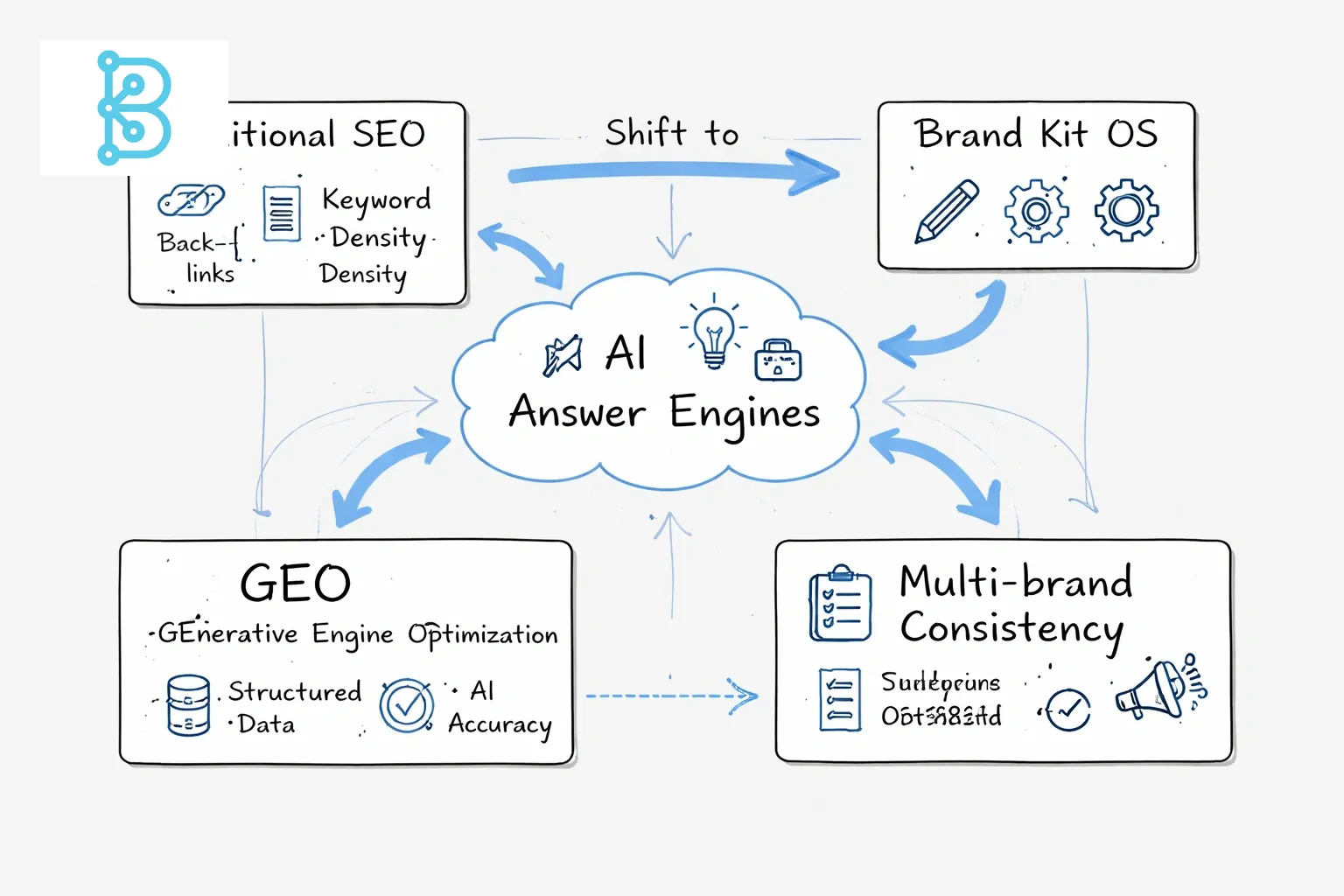
GEO is structuring content so AI systems can extract and cite it accurately. Traditional SEO chased backlinks and keyword density. GEO chases clarity and consistent entity definitions. Agencies need GEO because AI answer engines are replacing the click.
User behavior has shifted. People ask an AI assistant a question and get one synthesized answer. That answer pulls from sources the AI trusts as clear and unambiguous.
Managing one brand this way is annoying. Managing ten is chaos. Each client's voice, positioning, and facts need to live somewhere AI models can find them without guessing.
- Traditional SEO rewarded keyword stuffing.
- GEO rewards structured data.
- AI cites what it can parse.
- Agencies feel this pain at scale.
This is the problem Brand Kit OS solves for agencies drowning in scattered brand documentation.
Why Structured Brand Data Beats Static Documents
AI models parse organized fields faster than unstructured prose. A brand kit stored as tagged data lets generative engines grab accurate tone and facts on demand. Static documents? They force AI to guess, which increases hallucination risk.
Most agencies store client guidelines in a 40-page PDF in Google Drive. Voice notes are in Notion. Logos are in Dropbox. When a teammate needs AI content, they copy-paste fragments into ChatGPT and hope the output sounds right.
AI struggles here. It can't reliably extract facts from a PDF with messy formatting. It can't cross-reference color codes with tone guidelines when those live in disconnected files.
Structured data fixes this. When brand information exists as machine-readable fields, AI systems can:
| Static PDF Approach | Structured Brand Data Approach |
|---|---|
| Manual copy-paste per session | Auto-export to any AI platform |
| Tone drifts across outputs | Voice governed by rules |
| Onboarding takes weeks | Context syncs in minutes |
| No audit trail | Full version history |
| Human-readable only | Multi-format exports |
This is why dynamic brand guidelines software is now essential for agencies serious about AI visibility.
The Multi-Brand Challenge: Scaling GEO Without Losing Fidelity
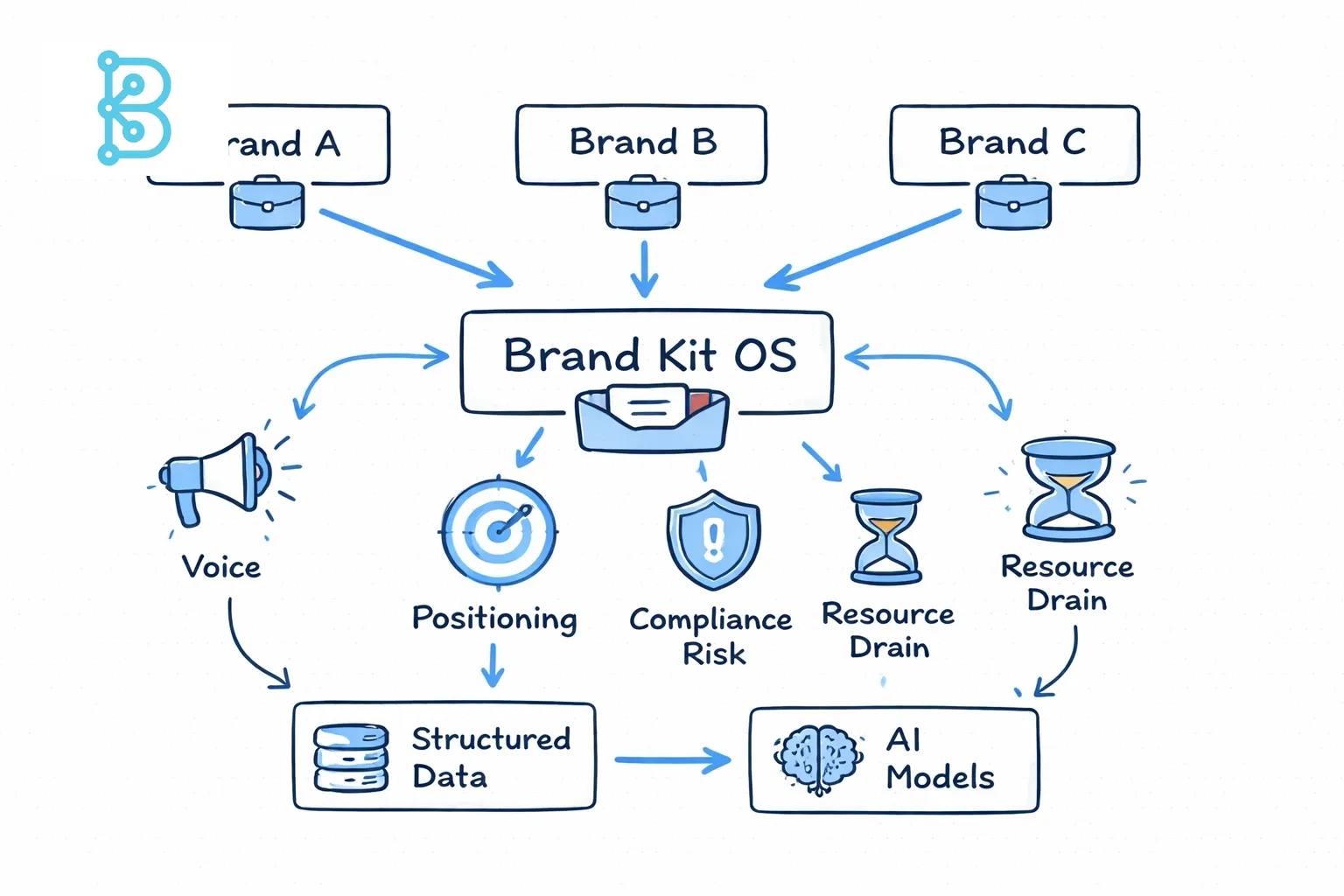
Multi-brand agencies hit a wall that single-brand teams don't. Each client needs distinct voice and positioning, maintained simultaneously. Doing this manually across ten clients invites drift and compliance risk.
Freelancers and new hires take weeks to learn one client's voice. Multiply that across every account, and onboarding becomes a resource drain.
Add the GEO layer. Each brand needs a structured dataset AI models can pull from. Without a central system, you're maintaining dozens of disconnected files, each formatted differently, each a liability.
Brand Kit OS handles this for agencies managing multiple client brands. A multi-brand dashboard lets teams switch client contexts instantly without re-explaining rules.
What makes it scalable:
- Unlimited brand kits in one account.
- Role-based access so freelancers only see what they need.
- Automated extraction from client websites in minutes.
- Export formats for ChatGPT, Claude, and custom pipelines.
Building Your GEO Playbook
A GEO playbook starts with auditing existing docs. Then you convert notes into tagged fields. Finally, export that data to every AI platform your clients use.
Audit first. Most agencies find client data scattered across Notion, Docs, PDFs, and Slack.
Consolidate into fields. Break brand identity into discrete components. We outline how in our guide on structuring brand guidelines for AI tools.
Extract, don't retype. Don't waste hours typing. Automated tools pull brand data from client sites and social profiles.
Set governance rules. Each brand needs guardrails negative directories, tone constraints. See our framework for AI governance for brand consistency.
Export everywhere. Structured data helps only if it reaches the tools you use. Markdown exports, ChatGPT formats, Claude integrations not just internal dashboards.
Watch for drift. Brand voice degrades without active governance. Treat brand drift like technical debt it builds up silently until it's expensive to fix.
How Structured Data Improves Visibility
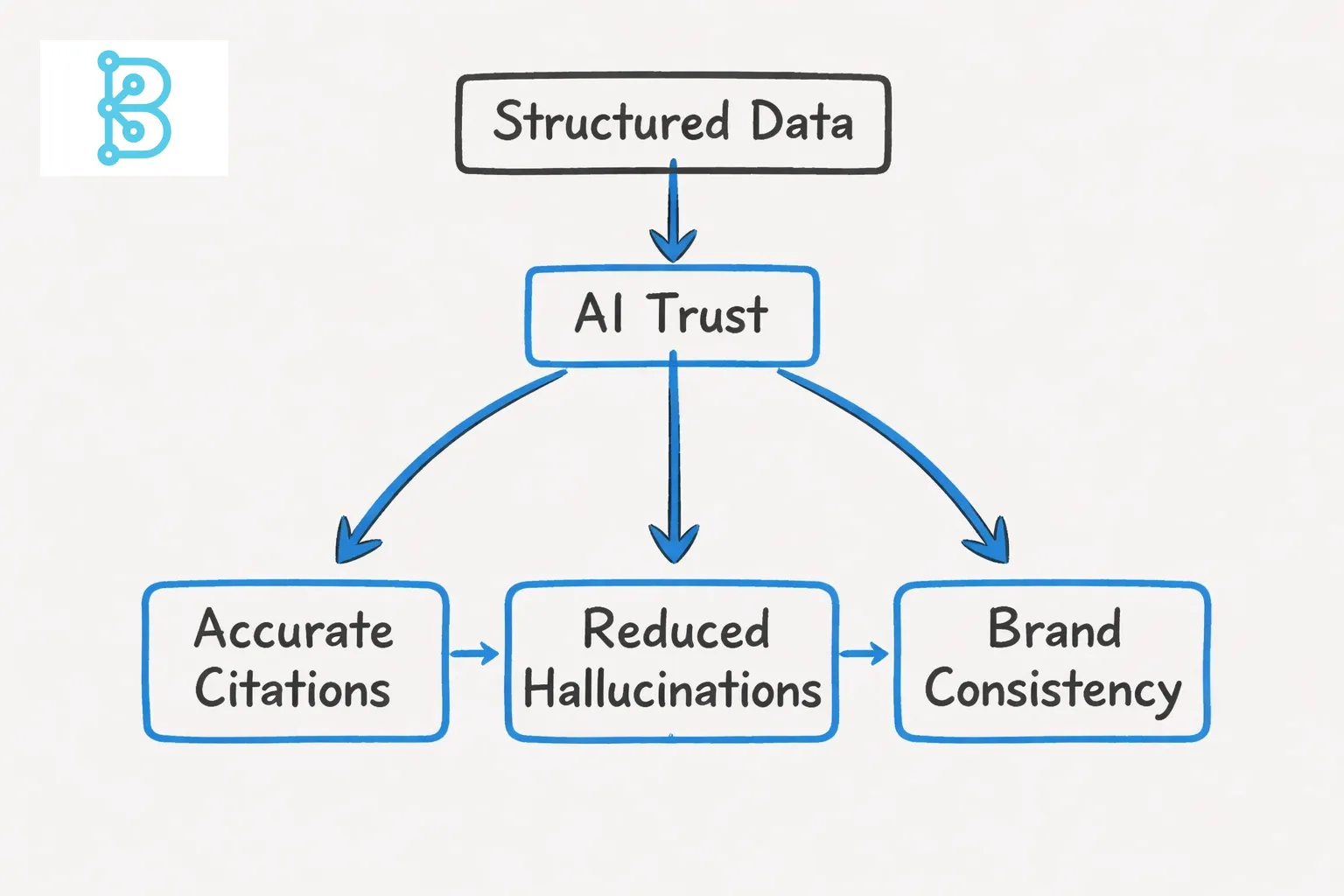
Structured data makes AI answer engines cite your client accurately. When AI trusts a source's clarity, it references it directly. This holds for ChatGPT, Perplexity, and Google's AI Overviews.
Answer engines like specificity. Clear positioning and consistent terminology leave less room for errors.
We cover this in brand governance is the new SEO. Winning agencies aren't producing more content. They're producing content AI trusts.
For multi-brand agencies, every client benefits from the same system. One platform enforces structure across ten voices.
Benefits compound:
- Fewer hallucinations.
- Faster onboarding.
- Consistent citations.
- Less manual review.
Tools for Implementing GEO at Scale
You need tools built for structured brand governance. Generic document storage won't cut it. You need extraction automation, export flexibility, and central governance.
Brand Kit OS has what you need:
Automated Brand Extraction pulls data from client sites and social profiles, cutting onboarding time.
Export to Any AI Platform ensures files work with ChatGPT, Claude, markdown, and RAG pipelines. See our MCP documentation.
Team Collaboration with role-based access lets you share kits with freelancers securely.
Client Presentation Ready means you can share polished overview pages for approval.
For a feature breakdown, see Brand Kit OS vs. Brandkit.com. Check our pricing page for plans matching your client volume.
Getting Started
Move one client at a time from static docs to a structured system. Prioritize clients with the highest AI content volume. Get quick ROI, then build the habits for a full rollout.
Pick one client. Migrate their brand data. Give your team a working example.
Then expand:
- Migrate top three clients in month one.
- Train the team on extraction and export.
- Set governance rules negative directories and tone constraints.
- Check AI outputs for consistency across two platforms.
- Expand to the rest over the next quarter.
Agencies don't need another static tool. They need a system built for how AI actually consumes content.
The agencies that win in AI search won't be the ones producing the most content. They'll be the ones whose data AI models trust.