Brand Kit OS vs Brandkit.com: 2026 Comparison Guide
When evaluating brand management solutions in 2026, many teams encounter two similarly named platforms: Brand Kit OS and Brandkit.com. Despite the naming similarity, these tools serve fundamentally different purposes and employ contrasting approaches to brand consistency. This comprehensive comparison will help you determine which platform aligns with your organization's needs.
Platform Philosophy: AI-Native vs. Traditional DAM
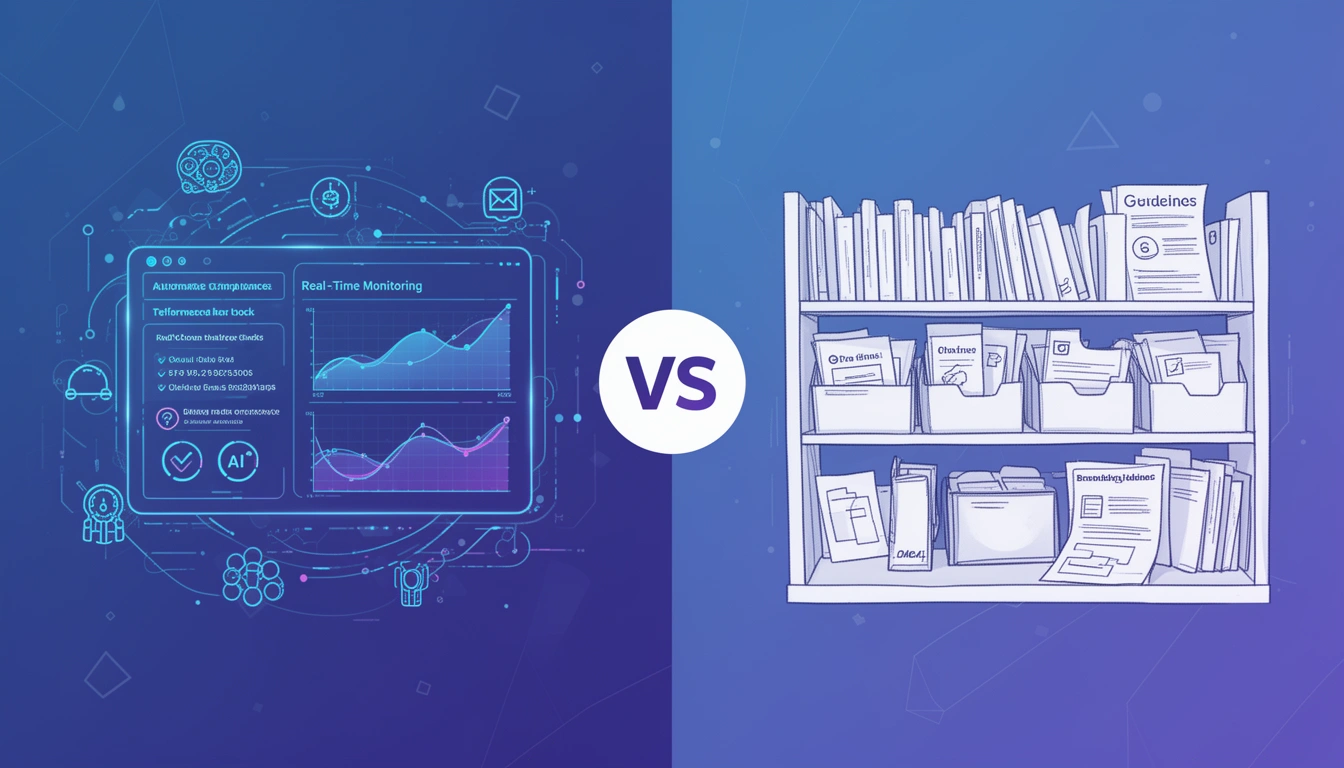
The core distinction between these platforms lies in their architectural philosophy. Brand Kit OS operates as an AI-native brand management system that treats your brand kit as a programmatic API enabling real-time governance over AI-generated content across all channels. The platform was built from the ground up to address the velocity and complexity of modern content production, where brands generate hundreds of assets daily using generative AI tools.
Brandkit.com, by contrast, functions primarily as a digital asset management (DAM) system with brand guideline hosting capabilities. It excels at organizing existing assets and providing teams with centralized access to logos, images, and documents. While it offers brand presentation features, it wasn't designed to govern AI-driven content workflows or enforce compliance at the point of creation.
Governance Capabilities: Proactive vs. Reactive
Brand Kit OS implements proactive governance by integrating directly with generative AI workflows. When marketers create content using tools like Claude, Midjourney, or proprietary models, Brand Kit OS provides real-time compliance checks flagging incorrect color codes, off-brand messaging, or unauthorized logo usage before assets are published. This approach prevents brand drift rather than detecting it after the fact.
The platform's governance extends to:
Automated tone and voice verification against your messaging framework
Visual compliance checks for color palettes, typography, and layout standards
Multi-modal governance across images, videos, voiceovers, and text in multiple languages
Custom rule enforcement that prevents content homogenization from generic LLMs
Brandkit.com operates with a reactive governance model providing brand guidelines and assets that teams can reference, but without automated enforcement mechanisms. Compliance depends on manual reviews and team members correctly interpreting and applying guidelines. This works well for smaller teams with limited content output, but creates bottlenecks as production scales.
Integration with AI Content Workflows
As organizations increasingly rely on AI for content generation, integration capabilities become critical. Brand Kit OS offers native integrations designed specifically for the AI era:
Claude Skill Export: Transform your brand guidelines into executable AI instructions that Claude can reference during content creation (learn more about Claude Skill Export capabilities)
MCP Protocol Support: Connect with AI systems through the Model Context Protocol for real-time brand intelligence
API-First Architecture: Enable your brand kit to function as middleware between generative AI tools and output channels
Automated Synchronization: Push brand updates across all connected AI systems simultaneously
These capabilities are essential for maintaining AI-generated content brand consistency in 2026, where content velocity can quickly outpace manual oversight.
Brandkit.com focuses on traditional integrations connecting with design tools like Adobe Creative Suite and providing embeddable brand guidelines. While valuable for designers working in conventional workflows, these integrations don't address AI-generated content governance or automated compliance at scale.
Scalability and Multi-Brand Management
For enterprises managing multiple brands or product lines, scalability becomes paramount. Brand Kit OS provides sophisticated multi-brand architecture that allows you to:
Manage distinct brand kits with inheritance hierarchies (corporate brand → sub-brands → regional variations)
Apply brand-specific governance rules automatically based on content context
Track compliance metrics across all brands from a unified dashboard
Scale content production without proportionally increasing review overhead
Organizations scaling brand consistency across multiple entities benefit from Brand Kit OS's approach to multi-brand management, which treats each brand as a distinct governance layer rather than separate asset libraries.
Brandkit.com supports multiple brand spaces but manages them primarily as separate repositories. This approach works for organizations with completely distinct brands that rarely interact, but creates complexity when managing brand families with shared elements and varying levels of autonomy.
Automation and Compliance at Scale
The automation gap between these platforms becomes most apparent at scale. Brand Kit OS delivers automated brand compliance through:
Continuous monitoring: Real-time scanning of content across channels for brand compliance issues
Intelligent flagging: AI-powered detection of subtle brand violations (tone inconsistencies, style drift, visual misalignment)
Automated corrections: Suggested fixes for common compliance issues that can be applied with one click
Workflow routing: Automatic escalation of complex issues to appropriate reviewers based on violation type
This level of automation allows marketing teams to increase content output 5-10x without proportionally increasing brand governance headcount a critical advantage as preventing AI slop becomes essential to brand differentiation.
Brandkit.com provides tools for manual compliance checking approval workflows, commenting features, and version control but doesn't automate the actual compliance verification process. Teams must still manually review each asset against guidelines, creating predictable bottlenecks as content volume increases.
Pricing and ROI Considerations
While specific pricing varies based on team size and features, the platforms employ different value propositions:
Brand Kit OS positions itself as a premium solution justified by measurable ROI:
Reduction in brand compliance review time (typically 60-80%)
Increased content output without additional headcount
Reduced risk of brand violations reaching customers
Faster time-to-market for campaigns (measured in days, not weeks)
3-5x ROI in later years through efficiency gains and reduced rework
The platform targets organizations where brand consistency directly impacts revenue enterprises, scaling startups, and marketing teams facing production strain from high content velocity.
Brandkit.com typically offers more accessible entry-level pricing, making it attractive for:
Small teams with limited content production
Organizations primarily needing asset storage and brand guideline hosting
Businesses where manual review workflows are sustainable
Teams not yet integrating AI into content production
Use Case Alignment: Which Platform Fits Your Needs?
Choose Brand Kit OS if you:
Generate high volumes of content using AI tools (50+ assets per week)
Operate across multiple channels with omnichannel brand consistency requirements
Need automated governance to prevent brand violations at the point of creation
Manage multiple brands or product lines with complex inheritance relationships
Require integration between brand guidelines and generative AI workflows
Face production bottlenecks from manual brand compliance reviews
Want to scale content output without proportionally scaling headcount
Operate in regulated industries where brand compliance carries legal implications
Choose Brandkit.com if you:
Primarily need centralized storage for brand assets and guidelines
Have a small team with manageable content volumes
Can sustain manual review workflows without creating bottlenecks
Don't currently use AI for content generation
Require basic brand guideline presentation and sharing capabilities
Prioritize simple, straightforward asset management over advanced governance
Need a more budget-friendly entry point to organized brand management
The Future of Brand Management: AI-Native Architectures
As we progress through 2026, the brand management landscape continues shifting toward AI-native architectures. The question isn't whether AI will transform content production that transformation is already underway. The question is whether your brand management infrastructure can govern AI-generated content at the velocity modern marketing demands.
Traditional DAM systems like Brandkit.com serve an important role in organizing existing assets and presenting brand guidelines. However, they weren't architected for a world where a single marketer can generate hundreds of variations in an afternoon, where content must adapt dynamically across channels, and where brand consistency requires real-time enforcement rather than retrospective review.
Brand Kit OS represents the next generation: brand kits as executable systems rather than reference documents, governance as automated guardrails rather than manual checkpoints, and brand management as proactive prevention rather than reactive correction.
Making Your Decision
The choice between Brand Kit OS and Brandkit.com ultimately depends on where you are in your brand management maturity and AI adoption journey. If you're just beginning to organize brand assets and establish guidelines, a traditional DAM approach may suffice. If you're scaling content production with AI and struggling to maintain consistency across channels, an AI-native governance platform becomes essential.
Consider your current pain points:
Do manual compliance reviews create bottlenecks? AI-native governance eliminates this friction.
Are off-brand assets reaching customers despite review processes? Proactive enforcement prevents violations before publication.
Does increasing content output require proportional increases in brand team headcount? Automation breaks this linear relationship.
Do you struggle to maintain consistency across multiple brands or channels? Programmatic governance scales effortlessly.
Both platforms have earned their place in the brand management ecosystem by solving different problems for different audiences. Understanding your organization's specific needs, content velocity, AI adoption trajectory, and scalability requirements will guide you to the platform that delivers the greatest value for your brand.
For organizations building brands in the AI era where content velocity, channel proliferation, and personalization demands continue accelerating investing in AI-native governance infrastructure isn't just about efficiency. It's about maintaining the brand differentiation and consistency that drives customer recognition, trust, and ultimately, revenue.