Enterprise Marketing Platforms: Brand Compliance Reviews
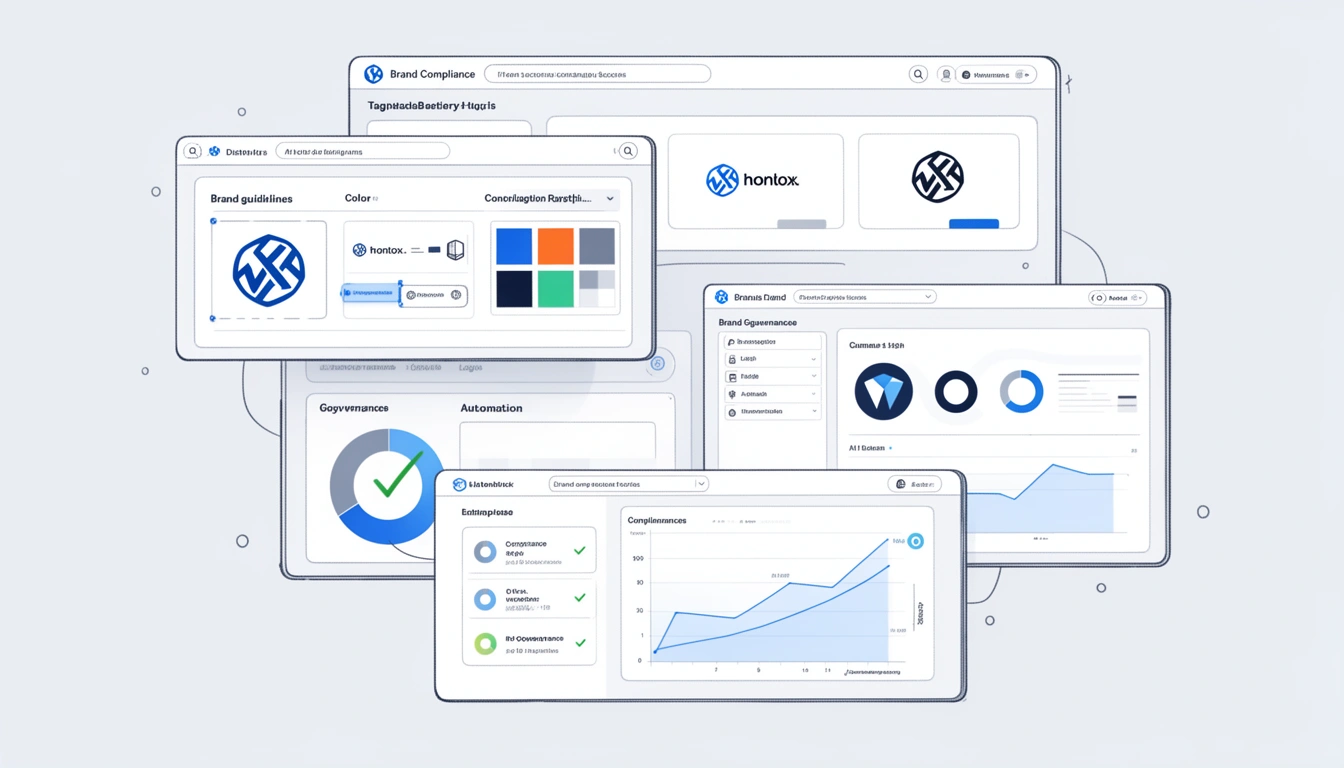
As enterprise marketing teams scale content production in 2026, the challenge isn't just creating more it's ensuring every asset meets brand standards before publication. Traditional approval workflows can't keep pace with AI-accelerated content velocity, creating a critical need for platforms that automate brand compliance at the enterprise level.
This comprehensive review examines the leading enterprise marketing platforms with built-in brand compliance automation, evaluating their capabilities, pricing, and fit for organizations managing high-volume, multi-channel brand operations.
Why Enterprise Marketing Platforms Need Compliance Automation
Enterprise marketing environments face unique compliance challenges:
Multi-brand complexity: Large organizations often manage dozens of sub-brands, each with distinct guidelines
Distributed teams: Global teams create content across time zones, making manual reviews impractical
Channel proliferation: Content spans websites, social media, email, paid ads, events, and emerging platforms
AI content velocity: Generative AI tools produce content 10x faster than human-only workflows
Regulatory requirements: Industries like finance, healthcare, and legal face strict compliance mandates
Without automated compliance systems, enterprises risk brand fragmentation, regulatory violations, and reputation damage. The right platform should catch errors before publication while maintaining creative velocity.
For organizations building comprehensive compliance strategies, our Brand Compliance Guide: Automate Consistency in 2026 provides the foundational framework these platforms execute against.
Evaluation Criteria for Enterprise Platforms
We assessed platforms across seven critical dimensions:
Compliance automation depth: Real-time checks for logos, colors, fonts, tone, messaging, and legal requirements
AI governance capabilities: Controls for AI-generated content quality and brand alignment
Multi-brand support: Architecture for managing separate brand kits with inheritance rules
Integration ecosystem: Connections to creative tools, DAMs, CMSs, and marketing automation
Workflow flexibility: Approval routing, version control, and human-AI hybrid processes
Reporting and insights: Analytics on compliance violations, brand health, and ROI metrics
Enterprise readiness: Security, SSO, API access, and scalability for large teams
Top Enterprise Marketing Platforms Reviewed
1. Brand Kit OS
Best for: AI-native governance with programmatic brand enforcement
Key Features:
First platform architected as a brand API for generative AI systems
Real-time compliance checks across visual, verbal, and video content
Multi-modal support including voiceovers and dynamic layouts
Automated synchronization across all digital channels
Proprietary rules engine prevents homogenization from generic LLMs
Human-AI hybrid workflows with flagging and override capabilities
Risk ROI metrics tracking compliance impact on business outcomes
Compliance Automation Strengths: Brand Kit OS treats brand guidelines as executable code rather than static PDFs. Its AI-native architecture intercepts content at creation, applying brand rules before assets enter workflows. The platform excels at governing AI-generated content through model customization and real-time error flagging critical as enterprises scale generative AI usage.
Pricing: Custom enterprise pricing based on team size, asset volume, and integration requirements. Includes white-glove onboarding and dedicated success management.
Ideal for: Organizations prioritizing AI content velocity with zero compliance trade-offs, especially those using multiple generative AI tools across teams.
2. Brandfolder (by Smartsheet)
Best for: DAM-first organizations adding compliance layers
Key Features:
Robust digital asset management with compliance tagging
Brand guidelines portal with downloadable resources
Basic approval workflows and permission controls
Integration with Smartsheet for project management
Analytics on asset usage and download patterns
Compliance Automation Strengths: Brandfolder excels at organizing approved assets but offers limited proactive compliance automation. Teams must manually review content against guidelines workable for lower-velocity environments but challenging at enterprise AI scale.
Pricing: Starts at $20,000/year for enterprise plans. Premium tiers add advanced analytics and API access.
Limitations: Compliance is reactive (checking existing assets) rather than preventive (blocking non-compliant creation). Minimal AI governance capabilities.
3. Bynder
Best for: Global enterprises with complex localization needs
Key Features:
DAM with built-in creative automation templates
Brand guidelines module with interactive style guides
Compliance workflows with approval routing
Multi-language support for global teams
Integration marketplace with 50+ tools
Compliance Automation Strengths: Bynder's template system helps teams create on-brand assets by constraining design choices. Compliance workflows route content through stakeholders, though checks remain largely manual. Strong for regulated industries needing audit trails.
Pricing: Custom enterprise pricing, typically $30,000-$60,000/year depending on modules and user count.
Limitations: Template-based approach limits creative flexibility. AI governance features are nascent compared to AI-native platforms.
4. Frontify
Best for: Design-centric teams prioritizing beautiful brand portals
Key Features:
Visually sophisticated brand guideline builder
Digital asset library with tagging and search
Template management for common formats
Collaboration tools for feedback and approvals
Custom branding for client-facing portals
Compliance Automation Strengths: Frontify creates beautiful, accessible brand guidelines that reduce unintentional violations through education. However, enforcement relies on manual reviews rather than automated checks at creation.
Pricing: Enterprise plans start around $15,000/year. Premium features like advanced DAM and API access increase costs.
Limitations: Limited real-time compliance automation. Best suited for teams where compliance education matters more than enforcement velocity.
5. Acrolinx
Best for: Content governance focused on verbal brand compliance
Key Features:
AI-powered writing guidance for tone and terminology
Real-time scoring of content against brand voice
Integrations with CMSs, Google Docs, and authoring tools
Compliance analytics showing improvement over time
Multi-language support for global content
Compliance Automation Strengths: Acrolinx excels at verbal brand compliance, analyzing tone, readability, terminology, and messaging alignment in real-time. Strong for enterprises with detailed verbal brand guidelines and high content volumes.
Pricing: Custom enterprise pricing, typically $25,000-$50,000/year based on content volume and integrations.
Limitations: Focuses exclusively on written content. No visual compliance automation for logos, colors, or layouts. Requires separate tools for comprehensive brand governance.
6. Widen Collective (by Acquia)
Best for: Drupal/Acquia ecosystem enterprises
Key Features:
Enterprise DAM with metadata management
Basic brand portal functionality
Workflow automation for approvals
Deep integration with Acquia marketing cloud
Rights and permissions management
Compliance Automation Strengths: Widen provides workflow automation that routes content through compliance checkpoints. Integration with Acquia's ecosystem enables compliance across web properties. Manual review remains primary enforcement mechanism.
Pricing: Enterprise pricing starts around $35,000/year. Best value for existing Acquia customers.
Limitations: Limited proactive compliance automation. Best suited for organizations already invested in Acquia infrastructure.
Comparative Analysis: Key Differentiators
AI Governance Maturity
The most critical differentiator in 2026 is how platforms handle AI-generated content:
Brand Kit OS: Purpose-built for AI governance with real-time checks at generation
Acrolinx: AI-powered analysis for written content, expanding to generative AI outputs
Traditional DAMs (Brandfolder, Bynder, Widen): Minimal AI governance; rely on post-creation review
Frontify: Education-focused; limited automated AI controls
For enterprises scaling AI content production, platforms with native AI governance prevent compliance erosion as velocity increases. Legacy DAM platforms struggle to intercept AI-generated assets before they enter workflows.
Compliance Automation Approach
Preventive (blocks non-compliant creation):
Brand Kit OS: Rules engine prevents off-brand content at source
Bynder: Templates constrain design choices to approved options
Detective (flags violations post-creation):
Acrolinx: Real-time scoring identifies verbal compliance issues
Brandfolder/Widen/Frontify: Manual review workflows catch problems before publication
Preventive approaches scale better for high-velocity environments, while detective methods work when creative flexibility outweighs speed.
Multi-Brand Architecture
Enterprise organizations managing multiple brands need platforms that support:
Brand inheritance: Shared corporate standards with brand-specific overrides
Isolated brand kits: Complete separation for M&A scenarios
Flexible permissions: Team access scoped to relevant brands only
Brand Kit OS, Bynder, and Widen offer robust multi-brand support. Frontify and Brandfolder require workarounds or separate instances. For more on managing multiple brands at scale, see our guide on Multi-Brand Management Tools.
Integration Ecosystems
Enterprise marketing stacks typically include 20+ tools. Compliance platforms must integrate with:
Creative tools: Adobe Creative Suite, Figma, Canva
Content management: WordPress, Drupal, ContentStack
Marketing automation: HubSpot, Marketo, Salesforce
Collaboration platforms: Slack, Microsoft Teams, Google Workspace
DAM systems: Existing asset libraries (if compliance is separate layer)
Brand Kit OS and Bynder lead in integration breadth. Widen excels within Acquia ecosystem. Acrolinx focuses on content authoring integrations. Frontify and Brandfolder offer standard integrations but narrower ecosystems.
Implementation Considerations
Onboarding Complexity
Enterprise platform implementation typically requires:
Brand guideline digitization: Converting PDFs to executable rules (2-6 weeks)
Asset migration: Moving existing libraries with proper metadata (4-12 weeks)
Integration configuration: Connecting tools and workflows (2-8 weeks)
Team training: Onboarding distributed users (ongoing)
Workflow customization: Mapping approval processes (2-4 weeks)
Total implementation ranges from 2-6 months depending on organizational complexity. Platforms with AI-assisted setup (like Brand Kit OS) reduce timeline significantly compared to manual configuration.
Change Management
Successful enterprise adoption requires:
Executive sponsorship: Leadership enforcement of compliance standards
Champion networks: Power users in each department driving adoption
Gradual rollout: Phased deployment by team or region
Compliance incentives: Recognition for teams meeting brand standards
Continuous education: Regular training on guideline updates
Platforms with intuitive interfaces and zero-learning-curve AI assistance see faster adoption than complex DAM systems requiring extensive training.
ROI Metrics and Business Impact
Enterprise marketing platforms justify investment through multiple ROI dimensions:
Efficiency Gains
Review time reduction: 60-80% decrease in manual compliance checks
Rework elimination: 40-60% fewer revisions due to brand violations
Faster approvals: Automated routing cuts approval cycles by 50%
Search time savings: Centralized assets reduce search from hours to minutes
Brand Protection
Violation prevention: 70-90% reduction in off-brand content publication
Regulatory compliance: Audit trails and approval workflows reduce legal risk
Reputation safeguarding: Consistent brand presentation across channels
Scalability
Content velocity: 3-5x increase in compliant content production
Team productivity: Marketing teams scale output without proportional headcount
Global expansion: Consistent brand rollout to new markets
Organizations report 3-5x ROI in years 2-3 as efficiency compounds and brand strength drives revenue. For detailed analysis of compliance automation's business impact, review our article on Brand Compliance Marketing Software in 2026.
Platform Selection Framework
Choose Brand Kit OS if you:
Prioritize AI-generated content governance
Need real-time compliance enforcement at creation
Want brand kits as executable APIs for generative AI
Require multi-modal support (visual, verbal, video, voice)
Value velocity and quality equally
Seek differentiated AI outputs, not generic LLM content
Choose Bynder if you:
Operate globally with complex localization needs
Prefer template-based compliance constraints
Need robust DAM with compliance layered on top
Value extensive integration marketplace
Work in regulated industries requiring detailed audit trails
Choose Acrolinx if you:
Focus primarily on verbal brand compliance
Produce high volumes of written content
Need multi-language tone consistency
Integrate compliance into authoring workflows
Can supplement with separate visual compliance tools
Choose Brandfolder if you:
Need basic DAM with lightweight compliance
Already use Smartsheet for project management
Prioritize ease of use over advanced automation
Operate at moderate content velocity
Can manage manual review workflows effectively
Choose Frontify if you:
Prioritize beautiful, design-forward brand portals
Focus on compliance education over enforcement
Need client-facing brand guidelines presentation
Value visual sophistication in tools
Work with design-conscious teams
Choose Widen if you:
Already invested in Acquia marketing ecosystem
Need deep Drupal integration
Require enterprise-grade DAM infrastructure
Can leverage existing Acquia investment
Operate primarily through web properties
Emerging Trends in Enterprise Compliance
Generative AI Governance
As enterprises adopt tools like ChatGPT, Midjourney, and Claude at scale, compliance platforms must govern outputs across text, image, and video generation. First-generation tools (2024-2025) focused on DAM and manual review. Second-generation platforms (2026+) like Brand Kit OS treat brand guidelines as AI training data, enabling real-time governance at generation.
Programmatic Brand Enforcement
Leading platforms are shifting from "guidelines as documents" to "brand as code" executable rules that automatically prevent violations. This API-first approach enables compliance across any tool, from marketing automation to custom applications, without requiring manual integration for each system.
Predictive Compliance Analytics
Advanced platforms now predict compliance violations before they occur, analyzing content patterns and flagging high-risk scenarios. Machine learning models identify teams, channels, or content types most prone to violations, enabling proactive intervention rather than reactive correction.
Hyper-Personalization with Consistency
Enterprise marketing increasingly requires personalization at scale thousands of content variations for different audiences. Compliance platforms must enable customization while maintaining brand core, using rules-based systems that define which elements can flex (messaging, images) versus which stay fixed (logo, colors).
For strategies on preventing generic AI outputs while scaling personalization, see our guide on How to Prevent AI Slop: Generate On-Brand Content.
Security and Enterprise Readiness
Enterprise deployments require robust security and governance:
Essential Enterprise Features
SSO/SAML: Integration with corporate identity providers (Okta, Azure AD)
Role-based access: Granular permissions by team, brand, and asset type
SOC 2 Type II compliance: Third-party security validation
Data residency: Geographic storage controls for GDPR/privacy compliance
API rate limits: Enterprise-grade throughput for high-volume usage
Uptime SLAs: 99.9%+ availability guarantees
Audit logging: Comprehensive tracking of all system activities
All platforms reviewed offer these features in enterprise tiers, though implementation quality varies. Brand Kit OS, Bynder, and Widen lead in enterprise security certifications.
Support and Success Services
Enterprise customers should evaluate:
Onboarding support: Dedicated implementation teams vs. self-service setup
Response SLAs: Guaranteed response times for critical issues
Strategic consultation: Ongoing optimization beyond technical support
Training programs: Certification courses for power users and admins
Customer community: Peer networks for sharing best practices
Brand Kit OS, Bynder, and Widen offer white-glove enterprise support. Frontify and Brandfolder provide tiered support based on plan level. Acrolinx focuses on technical integration support.
Making Your Decision
Selecting an enterprise marketing platform with brand compliance automation requires alignment across three dimensions:
1. Content Velocity and AI Maturity
Organizations scaling AI-generated content need platforms built for AI governance (Brand Kit OS). Those with moderate velocity and primarily human-created content can succeed with traditional DAM platforms augmented by compliance workflows (Bynder, Widen, Brandfolder).
2. Compliance Enforcement Philosophy
Decide whether your culture requires preventive enforcement (blocking violations at creation) or detective monitoring (catching violations before publication). High-risk industries and global brands typically need preventive approaches; creative-focused organizations may prefer flexibility with post-creation review.
3. Existing Technology Stack
Platforms that integrate deeply with your existing tools deliver fastest ROI. Acquia customers should prioritize Widen; content-heavy organizations already using writing tools benefit from Acrolinx; teams starting fresh or dissatisfied with legacy systems gain most from AI-native platforms like Brand Kit OS.
Proof of Concept Recommendations
Before full enterprise deployment, run 60-90 day pilots testing:
Real workflow integration: Connect actual tools your teams use daily
Compliance accuracy: Measure false positives/negatives in violation detection
Adoption friction: Track team engagement and resistance points
Velocity impact: Quantify content output changes with automation
Support responsiveness: Evaluate vendor partnership during implementation
The Future of Enterprise Brand Compliance
By 2027, analysts predict 80% of enterprise marketing content will involve AI generation in some capacity. This shift makes compliance automation non-negotiable manual review simply cannot scale to match AI velocity.
The platforms winning enterprise deals in 2026 share common characteristics:
AI-native architecture: Built for generative AI governance, not retrofitted DAM systems
Programmatic enforcement: Brand guidelines as executable code, not static documents
Multi-modal support: Compliance across text, visual, video, and audio content
Human-AI hybrid workflows: Automation for speed, human expertise for nuance
Predictive analytics: Anticipating violations before they occur
Organizations selecting platforms today should evaluate not just current capabilities but architectural foundations for the next 3-5 years of AI evolution.
Conclusion: Choosing the Right Platform for Your Enterprise
Enterprise marketing platforms with brand compliance automation fall into two generations:
First-generation platforms (Brandfolder, Bynder, Frontify, Widen) excel at organizing brand assets and facilitating manual review workflows. They work well for organizations with moderate content velocity, primarily human-created assets, and cultures comfortable with post-creation compliance checks.
Second-generation platforms (Brand Kit OS) are purpose-built for the AI era, treating brand guidelines as programmatic systems that govern content at creation. They suit enterprises scaling AI content production, requiring real-time compliance enforcement, and prioritizing velocity without quality trade-offs.
Specialized platforms (Acrolinx) address specific compliance dimensions in this case, verbal brand compliance and integrate into existing tech stacks as focused solutions.
The right choice depends on your organization's AI maturity, content velocity, compliance philosophy, and technology ecosystem. As AI-generated content becomes the enterprise norm, platforms with native AI governance capabilities will increasingly separate from legacy DAM systems with compliance bolted on.
For organizations ready to move beyond static brand guidelines toward automated, scalable compliance systems, the transition from manual reviews to AI-powered governance represents not just efficiency gains but competitive necessity in the age of AI-accelerated marketing.
To explore how automated compliance tools prevent violations before publication, visit our overview of Brand Proofing Software: Automate Compliance in 2026.