AI Content Generation: Using Visual & Voice References
The AI content revolution has fundamentally changed how businesses create marketing materials, social media posts, and brand assets. For the first time in modern history, individual creators can generate diverse, high-quality content on demand faster and cheaper than traditional methods. But there's a catch: without proper brand references, AI-generated content becomes generic, inconsistent, and off-brand.
The quality of AI output depends entirely on the quality of your prompt and reference materials. This is why building a comprehensive brand kit goes far beyond storing logos and color codes. To truly harness AI's potential while maintaining brand consistency, you need a complete library of visual references including characters, objects, products, and even voice samples.
Why Visual References Matter for AI Content Generation
Generic text prompts produce generic results. When you tell an AI to "create an image of our product," it will invent something based on millions of training images none of which are actually your product. The result? Content that looks professionally designed but completely misses your brand's unique identity.
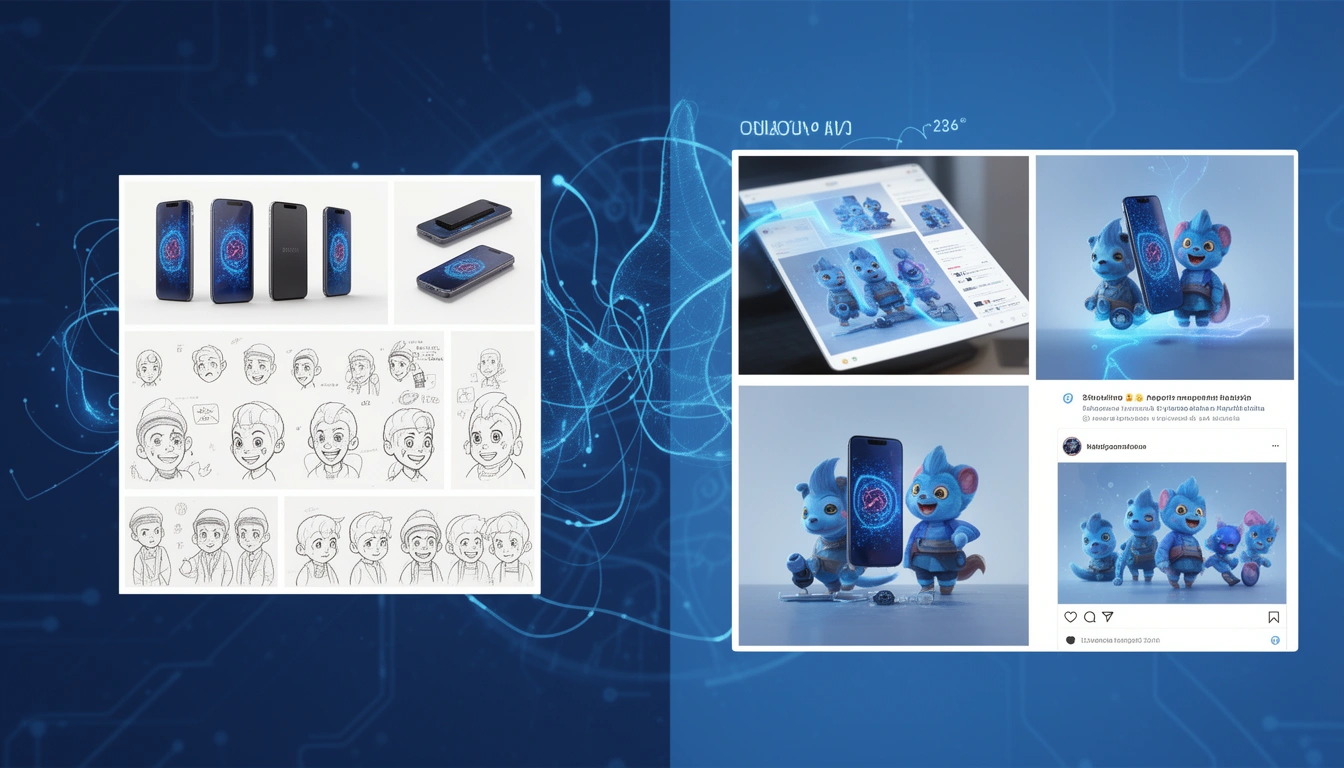
Reference images solve this problem by giving AI models concrete examples to work from. Instead of guessing what your mascot looks like or approximating your product's design, the AI can maintain visual consistency across every piece of content it generates.
Building Your Visual Reference Library
Creating an effective reference library requires strategic planning. Here's what you need to capture for each product, character, or object you want to replicate with AI:
Multiple Angles and Perspectives
A single photo isn't enough. Capture your subjects from at least 4-6 different angles: front, back, both sides, top, and bottom when applicable. This gives AI models enough information to understand the three-dimensional structure and recreate it accurately from any viewpoint you need in future content.
Solid Color Backgrounds
Always photograph or render your reference objects against solid, neutral backgrounds preferably white, gray, or light blue. This isolation allows AI models to focus on the subject itself without confusion from environmental elements. It also makes these references more versatile for compositing into different scenes and contexts.
Detail and Close-Up Shots
This is particularly critical for products with text, logos, or intricate design elements. AI image generators notoriously struggle with text accuracy they often distort letters, invent new words, or create gibberish on product packaging and labels. High-resolution close-ups of text areas, logos, and detailed features give the AI clear reference points to maintain accuracy.
For example, if your product has a distinctive label design with specific typography, capture that label in a separate close-up shot at high resolution. This helps prevent the AI from "hallucinating" alternative designs that look plausible but are completely wrong.
Character Consistency Across Campaigns
Brand mascots and character ambassadors require special attention. Whether you're using an illustrated character, a 3D rendered spokesperson, or even a consistent human model, maintaining character consistency across AI-generated content demands comprehensive references.
Document your character's:
Facial features and expressions - Capture neutral, happy, surprised, and other key emotions
Body proportions and posture - Full-body shots showing height ratios and typical stances
Outfit variations - Different clothing options or seasonal variations your character might wear
Color specifications - Exact skin tones, hair colors, and clothing colors with reference codes
Distinctive details - Accessories, marks, or unique features that make the character recognizable
Voice and Audio Consistency
Visual consistency is only half the equation. As AI voice generation becomes standard for video content, podcasts, and audio ads, maintaining vocal brand consistency is equally important.
Your brand kit should include:
Voice samples - Clean recordings of your brand voice reading various content types (conversational, educational, promotional)
Tone guidelines - Documentation of pacing, energy level, and emotional tone
Pronunciation guides - Specific instructions for brand names, product names, and technical terms
Music and sound preferences - Reference tracks that represent your brand's audio aesthetic
These audio references ensure that AI-generated voiceovers maintain the same personality and recognition value as your visual content.
The Competitive Advantage of Comprehensive Brand Kits
Companies that adapt quickly to AI-powered content creation are positioning themselves to win in the long run. But speed without consistency leads to brand dilution. The businesses thriving in 2026 are those that invested early in building robust, AI-ready brand kits.
A complete brand kit transforms from a static reference document into an executable system. When you've documented every nuance and detail from color palettes and typography to product angles and voice samples generating on-brand content becomes exponentially easier and more reliable.
This is the fundamental difference between brands that use AI effectively and those that struggle with inconsistent output. With comprehensive references, every team member and every AI tool accesses the same source of truth, producing content that's recognizably yours, every single time.
Implementing Reference-Based AI Workflows
To put this into practice, consider how Brand Kit OS enables teams to centralize all these reference materials in one accessible platform. Instead of scattered folders and outdated guidelines, your visual references, character sheets, product photos, and voice samples live in a synchronized cloud library.
When creating content, team members can:
Access the latest reference images for any product or character
Pull exact specifications for colors, fonts, and voice tone
Generate AI content using these references as input
Receive automated compliance checks against brand standards
Iterate quickly without manual review bottlenecks
This systematic approach to AI content generation prevents the "creative drift" that happens when different team members interpret brand guidelines differently or work from outdated references.
Beyond Basic Brand Guidelines
Traditional brand guidelines focused on rules: "always use this color," "never stretch the logo," "maintain this tone of voice." These rules are still important, but they're insufficient for the AI era.
Modern brand management requires examples, not just rules. AI models learn from visual and audio samples far more effectively than from written descriptions. Telling an AI to "create a friendly, approachable character" yields vastly different results than showing it 20 reference images of your actual brand character from multiple angles.
Your brand kit needs to evolve into a comprehensive reference library that includes:
Products and objects from multiple angles with solid backgrounds
Character references with expression variations and detail shots
Close-ups of text elements, logos, and intricate details
Voice samples demonstrating tone and pacing
Color palettes with exact codes and usage examples
Typography specimens showing hierarchy and application
Messaging frameworks with actual content examples
The ROI of Proper AI Reference Management
Building a comprehensive reference library requires upfront investment, but the returns compound quickly. Teams using complete brand kits report:
Faster content production - Less time spent on revisions and corrections
Reduced creative costs - More content generated in-house without external agencies
Stronger brand recognition - Consistent visual and audio identity across all channels
Scalable personalization - Ability to create variations while maintaining core brand elements
Future-proof workflows - Easy adaptation as new AI tools emerge
As AI content generation continues to accelerate, the gap widens between brands with robust reference systems and those relying on ad-hoc approaches. The former scales efficiently while maintaining quality; the latter struggles with inconsistency and wasted resources.
Getting Started with Your Reference Library
If you're building or updating your brand kit for AI-powered content creation, start with these priority items:
Week 1: Photograph your top 5-10 products or key objects from multiple angles against white backgrounds. Include close-ups of any text or detailed elements.
Week 2: If you have brand characters or mascots, create a comprehensive character sheet with different angles, expressions, and outfit variations.
Week 3: Record clean voice samples reading different types of content. Document tone, pacing, and pronunciation preferences.
Week 4: Organize all references in a centralized platform with clear naming conventions and metadata for easy retrieval.
This foundation enables your team to start generating consistent AI content immediately, with the ability to expand your reference library over time as you add new products, characters, or brand elements.
The Future Belongs to Prepared Brands
The AI content boom isn't slowing down it's accelerating. By January 2026, AI-generated content has become the norm rather than the exception. The brands winning this transformation are those that recognized early that quality AI output requires quality reference inputs.
Investing in comprehensive brand references objects, characters, products, voices, and all the nuanced details that make your brand unique is no longer optional. It's the foundation of modern brand management and the key to maintaining consistency as content velocity continues to increase.
The difference between generic AI content and distinctively branded content comes down to one thing: the quality and completeness of your reference materials. Build your library now, and you'll be equipped to harness AI's full potential while preserving the brand identity that sets you apart.
Ready to transform your brand guidelines into an AI-ready reference system? Explore how Brand Kit OS can help you centralize, synchronize, and leverage your brand assets for consistent AI-generated content across all channels.