Your Brand System Just Became Agent-Readable
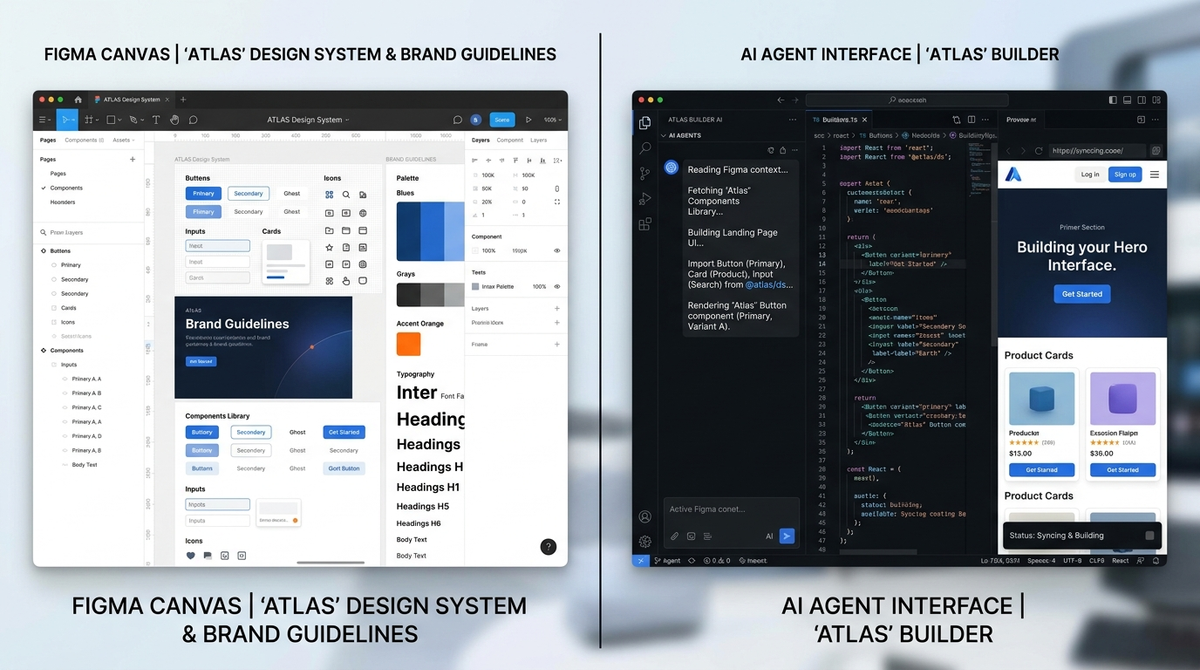
The design world just got weirder & more efficient at the same time.
Figma announced a beta MCP server last month. If you missed it, here's what it means: AI agents now have write access to your Figma canvas. Not just read-only access--not some limited API endpoint that lets them view & export. Full write access. Claude Code, Codex, Cursor, Copilot CLI & a half-dozen other AI tools can now create & edit design components inside your design system.
You should probably care about this. Even if you think AI agents don't affect your design workflow yet.
The Shift Nobody's Talking About
For years, the design tool space has been locked. Humans design. AI might help you generate ideas or iterate faster, but the tool--the canvas, the system, the final authority on what gets built--stayed firmly in human hands. Export workflows, read-only APIs, maybe a Plugin API if you're lucky.
Figma just cracked that open.
Here's the mechanical part: when you set up the Figma MCP server, agents can use a tool called use_figma to generate & modify design assets. The agent doesn't just throw random shapes at the canvas. It reads your design library first. It examines what components already exist. It looks at the naming conventions, the constraints, the variables, the design tokens. Then it builds with what's already there.
This is the opposite of the "AI generates random stuff" nightmare scenario you're probably imagining.
But here's where it gets interesting for people who actually care about brand consistency.
The Brand Problem That Isn't New
Every brand guideline document ever created has the same practical problem: nobody actually reads it.
A PDF sits in Google Drive. 40 pages. Beautiful. Comprehensive. Thoroughly ignored by anyone who has actual work to do. Engineers don't read it when they're building interfaces. Designers sometimes reference it when they remember it exists. Contractors & freelancers definitely don't read it. And your AI agents? They're not even looking.
This is the hard truth of brand management in a world where humans control the tools: consistency is a constant uphill battle. You ship a design system. You train your team. Six months later, someone's used a brand color that's technically in the ballpark but not quite right. A font weight that's close enough. A spacing pattern that feels about the same.
It compounds. You end up with a brand that looks like itself 70% of the time, which is better than nothing, but still visibly inconsistent across channels.
Now think about what happens when agents start touching design.
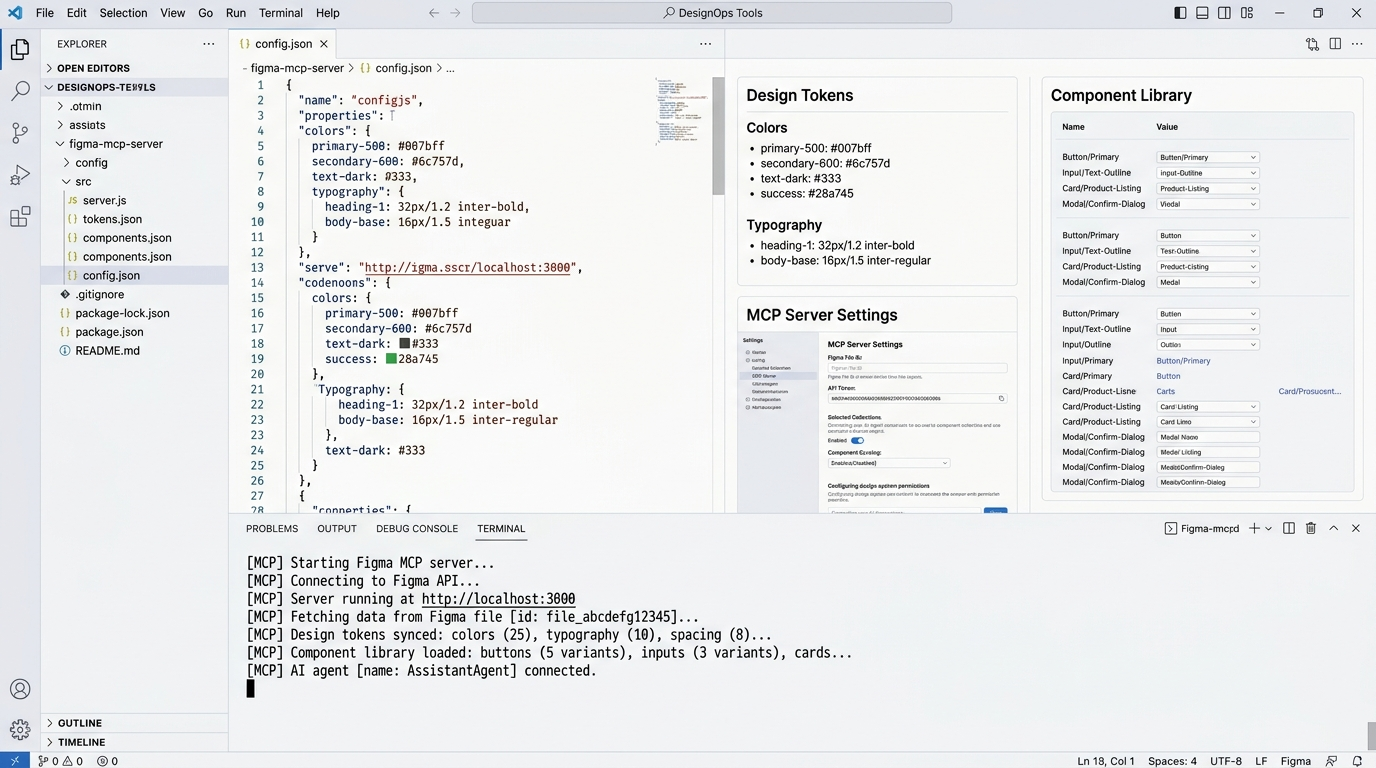
If your brand guidelines live in a PDF, agents will ignore them the same way humans do. But if your brand is structured, tagged, accessible, & readable at the API level--if your design tokens have actual names that mean something, if your components are documented, if your system is built for machines as much as humans--then every agent that touches your design system has no choice but to produce on-brand output.
Not because it's trying harder. Because it literally cannot build anything else.
What Actually Works
This requires structural thinking that most brand teams haven't done yet.
You need your brand system documented in a way machines can understand & follow. Not design aesthetics. Not brand stories. Not inspirational color palettes. I mean: the exact naming conventions for components. The precise spacing values as variables. The documentation that says "when you need a button, these are the five types that exist & here's the code example for each." The design tokens structured so a tool can read them & understand context.
This is what "brand system as infrastructure" actually means.
Some brands think they've got this covered. They've got a Figma library. It's organized. Everything's in the right place. But put an agent in front of it without proper structure & even the best-organized library becomes a guessing game for AI. The agent has to infer intent. It has to make assumptions about naming. It gets 70% of the way right & ships variations nobody intended.
Brands that win in an agent-driven design future are the ones treating their design system like an API. Components are versioned. Variables are named clearly. Documentation reads like a command reference, not prose. The system is structured for machines first, humans second.
(Humans will appreciate the clarity anyway.)
This is Where the Moment Lives
Figma's MCP server is free during beta. It'll become a paid API eventually. That's not the interesting part.
The interesting part is that Figma is the first major design tool to offer agents full write access at all. Not read-only. Not "export for external tooling." Agents can generate components, modify existing ones, rename layers, adjust variables. They can read your design library & build with it in real time.
Other tools will follow. They have to. But right now, this is the moment brands need to decide: are we treating our design system like a human artifact, or are we building it as a machine-readable source of truth?
Because soon, you won't get to choose anymore.
Agents are going to touch your design system whether you structured it for them or not. The ones that crash into PDFs & badly organized libraries will fail spectacularly & make everything worse. The ones that read clean, structured, well-documented systems will ship consistently on-brand work that nobody had to manually check.
The difference isn't what brand you have. It's how you've structured it.
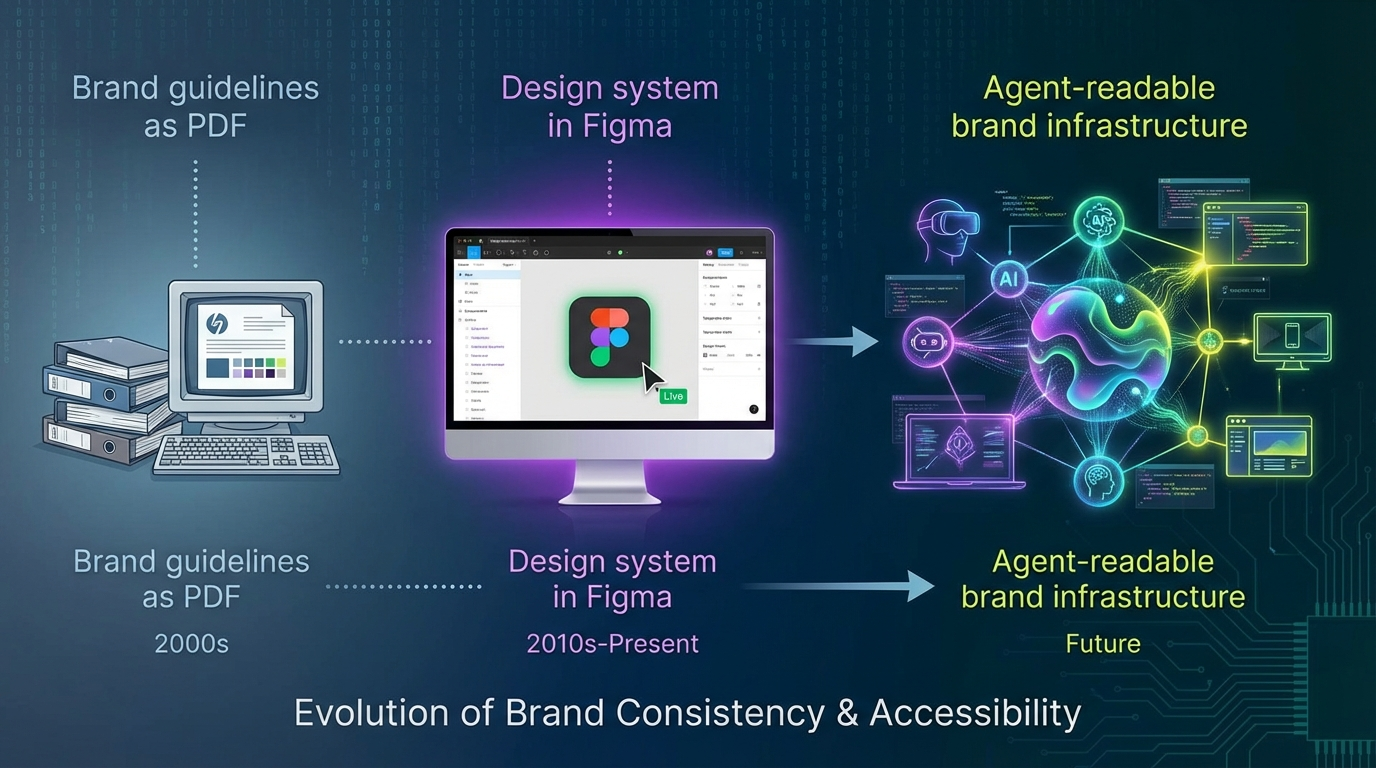
Zero-click brand management isn't a slogan. It's an infrastructure problem. & it's finally possible to solve it because the tools are catching up.
The agents are coming. Your brand system either speaks their language or it doesn't.