Human + AI: The Future of Brand Expertise and Governance
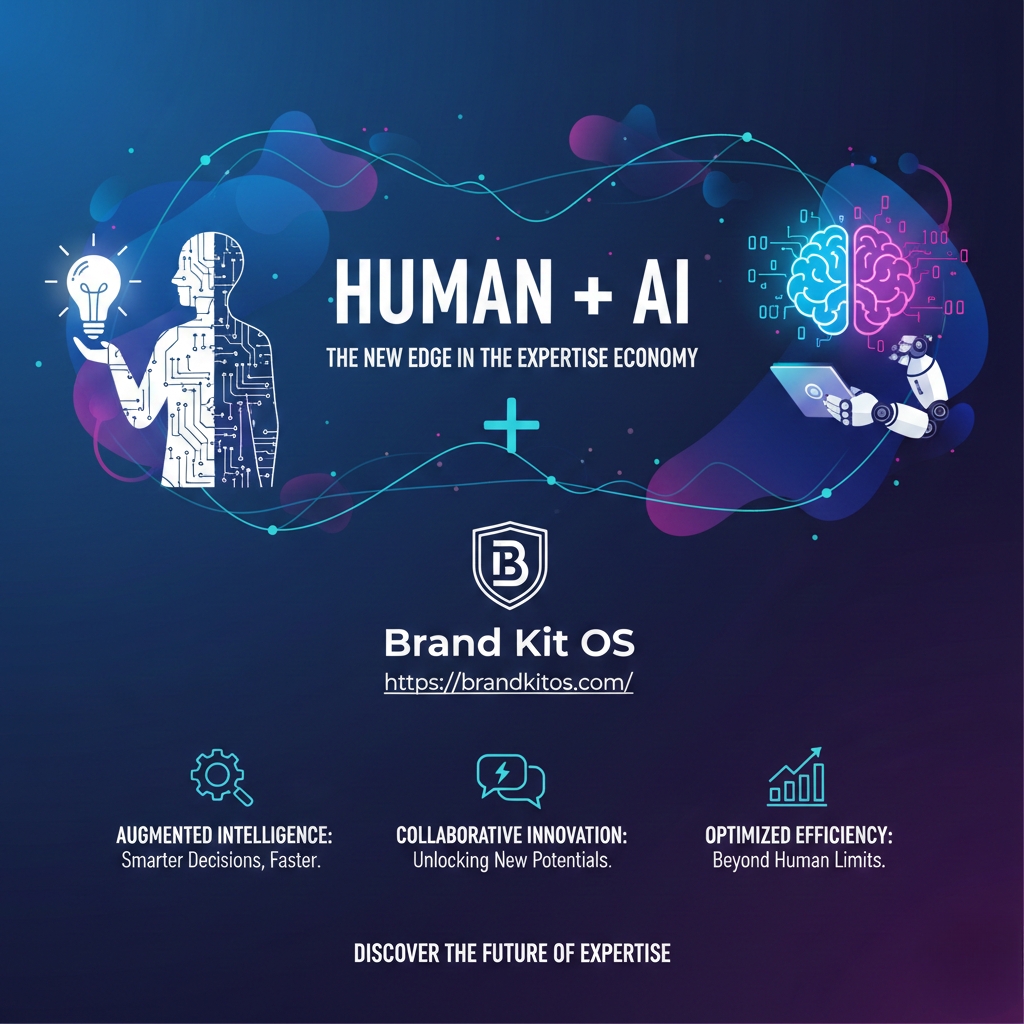
The expertise economy is undergoing a structural transformation. Human knowledge, once constrained by time, scale, and manual processes, is now being amplified by artificial intelligence. This shift has introduced a new competitive frontier: Human + AI collaboration, where domain expertise is no longer defined solely by experience, but by how effectively organizations govern, scale, and protect that expertise using intelligent systems.
At the center of this evolution is Brand Kit OS, a platform purpose-built to help organizations operationalize expertise through AI-governed brand systems. As generative AI becomes embedded across marketing, content, and communication workflows, enterprises must rethink how expertise is preserved, validated, and expressed at scale.
The Evolution of Expertise in a Generative AI Landscape
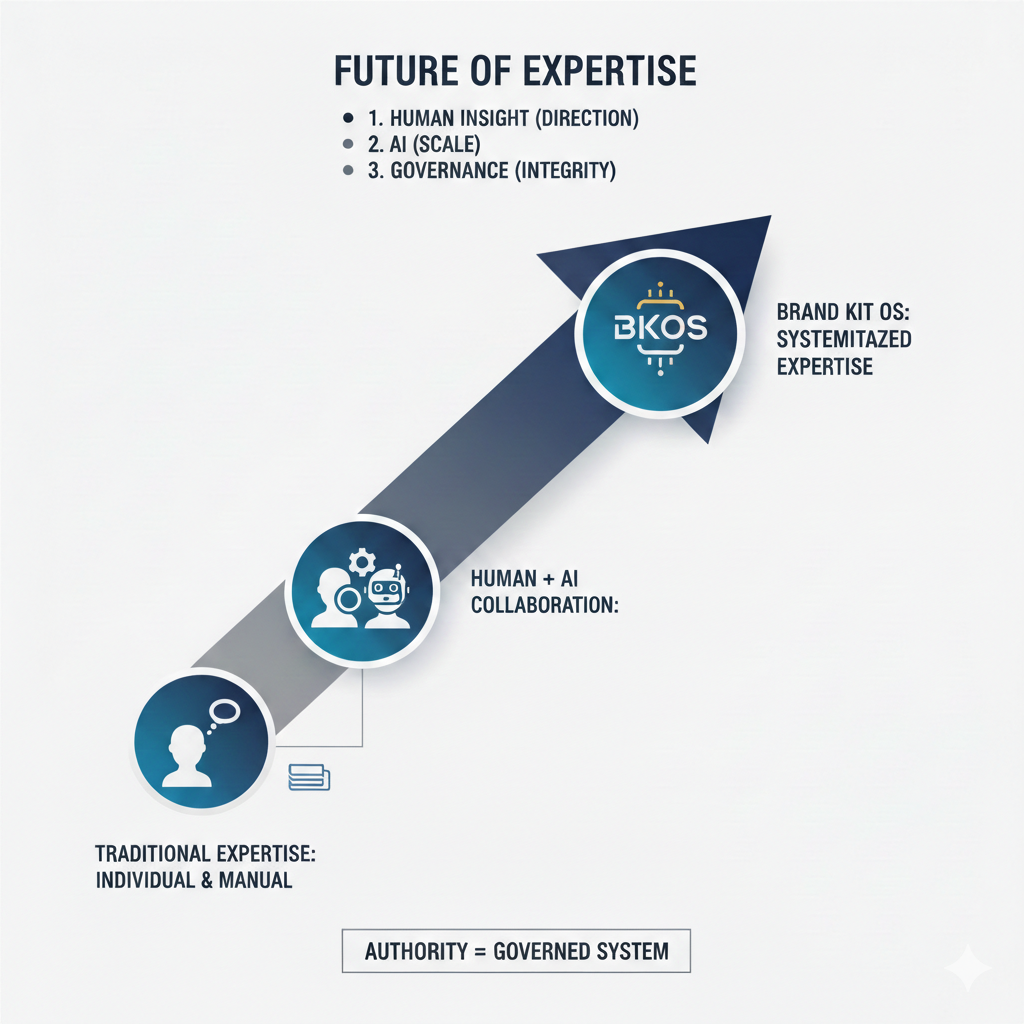
Traditionally, expertise was tied to individuals—subject-matter experts, brand leaders, and seasoned professionals whose authority was earned through repetition and validation. In today’s AI-driven environment, however, content velocity has outpaced manual oversight. AI can generate insights, narratives, and recommendations instantly, but without governance, this speed introduces inconsistency and erosion of trust.
The expertise economy now rewards organizations that can encode knowledge into systems, not just people. This is where digital brand kits and AI-enabled governance frameworks become essential. A digital brand kit is no longer a static document; it is an executable system that ensures every AI-generated output reflects approved language, positioning, and identity.
Why Human + AI Requires Governance, Not Guesswork
AI does not possess judgment or contextual awareness. It operates probabilistically, drawing from patterns rather than intent. Human expertise, on the other hand, provides interpretation, ethics, and strategic framing. When these two forces operate independently, organizations face fragmented messaging, diluted authority, and operational risk.
Brand Kit OS addresses this gap by transforming traditional brand kit examples—logos, tone guides, and messaging frameworks—into machine-readable governance layers. These layers constrain AI outputs before publication, ensuring alignment with brand standards and domain expertise.
This approach elevates online brand management from reactive content review to proactive system enforcement.
From Static Guidelines to Living Brand Systems
Most enterprises still rely on PDFs and slide decks to manage their brand. While these artifacts may document intent, they do not scale with AI. Modern expertise requires systems that can interpret, enforce, and audit brand rules automatically.
With Brand Kit OS:
Brandkit templates become structured governance frameworks
Brand asset management extends beyond files into semantic consistency
Branding tools evolve into AI-compatible control layers
This transformation enables organizations to maintain authority even as AI accelerates content creation across teams and channels.
Semantic SEO in the Expertise Economy
Search engines and AI-powered discovery platforms increasingly prioritize semantic relevance over keyword density. To rank—and remain credible—brands must demonstrate topical depth, contextual clarity, and authority. This is where Human + AI collaboration becomes a strategic SEO advantage.
By using AI to draft content clusters and humans to validate insight, organizations can build semantically rich ecosystems around core topics. Brand Kit OS supports this by ensuring AI-generated content aligns with predefined expertise frameworks, improving discoverability without sacrificing trust.
Semantic SEO benefits include:
Stronger topical authority
Consistent terminology across content
Higher relevance for AI Overviews and featured snippets
Improved EEAT signals through governance and accuracy
Operationalizing Expertise at Scale
Scaling expertise requires more than publishing content—it requires systems that enforce consistency. Enterprises seeking to buy brand kit software are no longer just investing in design efficiency; they are investing in governance infrastructure.
Brand Kit OS enables organizations to:
Codify expertise into structured brand logic
Enforce brand rules across AI-generated content
Maintain consistency across teams and regions
Reduce manual review bottlenecks
Protect brand equity in autonomous environments
This approach ensures that AI augments expertise rather than undermining it.
Human Judgment Remains Non-Negotiable
Despite AI’s capabilities, human expertise remains the final authority. Humans validate nuance, contextualize insights, and make ethical decisions. AI accelerates execution, but humans define meaning.
The competitive edge lies not in choosing between humans or AI, but in architecting systems where both operate in clearly defined roles. Brand Kit OS enables this balance by embedding human-defined governance into AI workflows, ensuring accuracy, consistency, and accountability.
The Strategic Advantage of Brand Kit OS
Organizations that successfully integrate Human + AI systems gain a durable advantage:
Faster content velocity without quality loss
Stronger authority signals across digital channels
Reduced brand risk and compliance exposure
Scalable expertise governance
Sustainable online brand management
This is not a trend—it is an architectural shift in how expertise is created and protected.
Conclusion: Expertise Is Now a System
The future of the expertise economy belongs to organizations that treat knowledge as a governed system, not a by product of manual effort. Human insight defines direction. AI provides scale. Governance ensures integrity.
Brand Kit OS sits at the intersection of these forces, enabling brands to transform static guidelines into living, AI-compatible governance systems. In a world where content is infinite, authority becomes the true differentiator.