Differentiate or Die: How to Position Your Brand in a Crowded Market
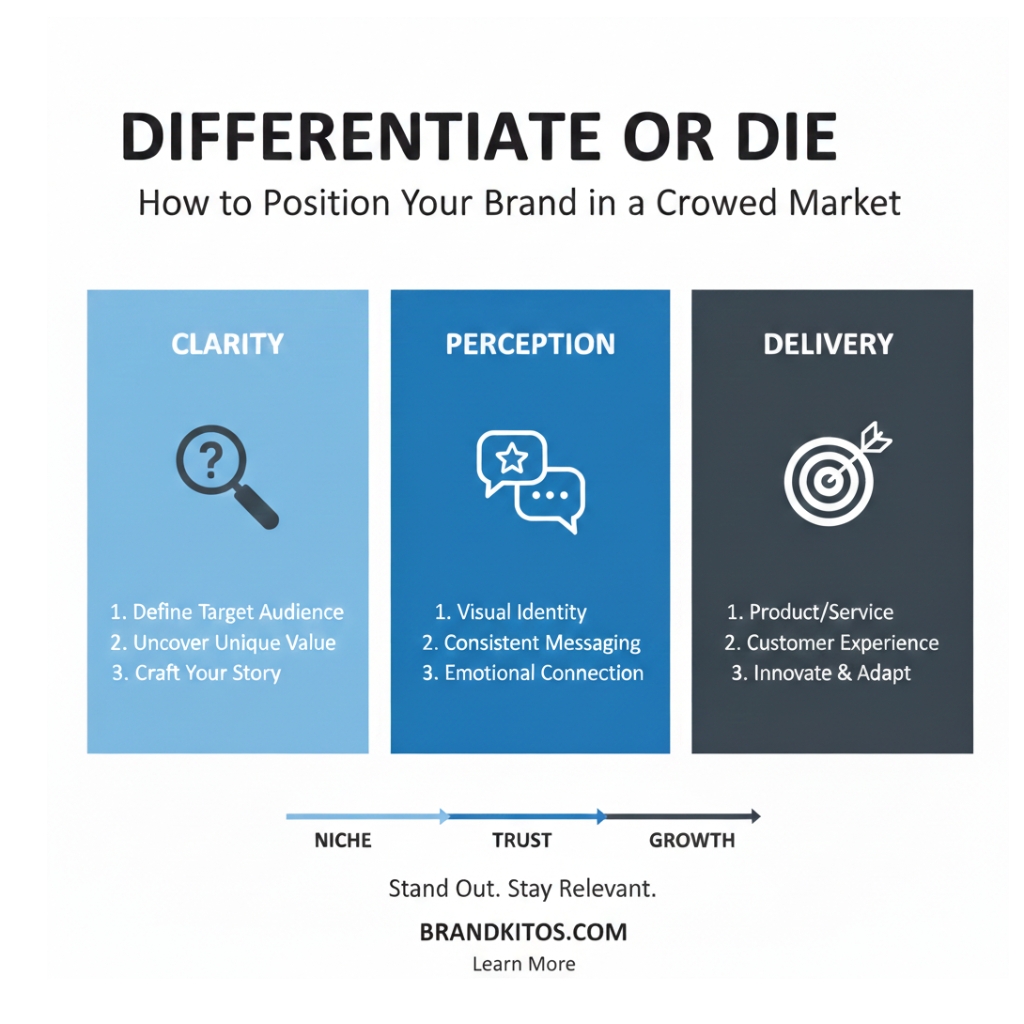
In today’s hyper-competitive business landscape, standing out isn’t just an advantage—it’s a necessity. Every day, countless brands compete for attention across digital and offline channels, making it increasingly challenging to secure customer loyalty. For SaaS companies, freelancers, and creative teams, differentiation is no longer optional. The question isn’t whether your brand is recognizable; it’s whether it is memorable.
Why Brand Differentiation Matters
Brand differentiation is the process of defining what makes your business unique compared to competitors. A strong, distinct brand identity allows your audience to instantly recognize and remember your company. Without differentiation, even the best products risk blending into a sea of competitors.
For SaaS companies, where solutions often overlap, having a clear brand strategy supported by a brand kit for SaaS companies can mean the difference between being a market leader and being just another option. By leveraging brand kits, businesses ensure consistent messaging, cohesive visual identity, and a unified customer experience across all touchpoints.
Building a Dynamic Brand Identity
Creating a dynamic brand identity requires more than just a logo or color palette. Modern brands rely on technology-driven solutions like dynamic brand guidelines software to maintain flexibility while ensuring consistency. Such platforms allow teams to update brand assets, typography, and messaging in real-time, reducing miscommunication and ensuring your brand evolves without losing its core identity.
Dynamic brand guidelines software is especially valuable for companies with multiple teams or remote employees. When every stakeholder has access to the latest brand standards, your brand remains cohesive across marketing campaigns, product interfaces, and client communications.
Organizing Assets with Brand Asset Management Systems
One of the biggest challenges in brand management is keeping assets organized. Enter the brand asset management system, a centralized hub where your logos, imagery, templates, and marketing collateral can be stored, accessed, and shared efficiently. This system streamlines collaboration and prevents inconsistent usage of your brand elements, which can dilute your market position.
For SaaS companies, freelancers, and agencies, a brand asset management system isn’t just a convenience—it’s a strategic tool. By making assets easily retrievable, your team spends less time searching for files and more time creating impactful campaigns that reinforce brand differentiation.
Integrating Brand Kits with APIs
Today’s brands demand seamless integration across platforms. Brand kit software with API integration enables teams to connect their brand assets to third-party tools, marketing automation platforms, and content management systems. This ensures that every piece of customer-facing material aligns with your brand guidelines, no matter where it’s published.
API-enabled brand kits are a game-changer for SaaS companies that operate at scale. By automating brand enforcement and asset updates, businesses reduce human error and maintain a consistent visual identity across hundreds of touchpoints.
Brand Management Software: The Backbone of Modern Branding
Brand management software consolidates all aspects of brand strategy, from visual identity to messaging guidelines. These platforms provide actionable insights into brand performance, allowing companies to track usage patterns, monitor compliance, and identify areas for improvement.
For freelancers, using brand management software can elevate professionalism and credibility. It allows solo entrepreneurs to present clients with a polished, consistent identity without the overhead of managing multiple tools or manual processes. Meanwhile, enterprise-level SaaS companies benefit from scalability and cross-department alignment.
Tailoring Your Brand Kit for Freelancers
Freelancers face unique challenges in establishing a recognizable brand. Unlike companies with dedicated marketing teams, freelancers often wear multiple hats and need flexible yet comprehensive branding solutions. A brand kit for freelancers ensures that portfolios, proposals, social media profiles, and personal websites reflect a unified identity, helping to attract higher-paying clients and build a reputation for reliability.
By investing in a tailored brand kit, freelancers can streamline workflows, reduce the time spent creating marketing materials, and maintain a professional image even while juggling multiple projects.
Semantic SEO and AEO: Making Your Brand Discoverable
While differentiation is key, discoverability is equally important. Optimizing your brand content for semantic SEO ensures that search engines understand not just individual keywords, but the context and intent behind your content. For example, using terms like brand kit software, brand management software, and dynamic brand guidelines within relevant headings, meta descriptions, and body copy signals authority and relevance.
Additionally, implementing Answer Engine Optimization (AEO) strategies—such as creating structured content that answers common questions about branding, SaaS tools, or freelance workflows—improves your chances of appearing in featured snippets and voice search results. This amplifies your brand’s visibility and positions you as a thought leader in a crowded market.
Steps to Position Your Brand Effectively
Audit Your Current Brand Identity: Evaluate how your brand is perceived and identify areas for improvement.
Invest in Brand Tools: Utilize brand management software and dynamic brand guidelines software to ensure consistency.
Centralize Assets: Implement a brand asset management system for seamless access and collaboration.
Leverage API Integration: Ensure your brand kit software with API integration connects to key platforms for automated compliance.
Tailor for Your Audience: Whether you’re a SaaS company or a freelancer, customize your brand kit to meet specific market needs.
Focus on Content Strategy: Use semantic SEO and AEO principles to boost online discoverability.
Conclusion
In a crowded market, blending in is a surefire way to be forgotten. Brands that differentiate themselves and maintain consistent, professional, and dynamic identities will thrive. Whether you’re a SaaS company looking to scale, a freelancer building a personal brand, or an agency managing multiple clients, investing in a brand kit for SaaS companies, brand management software, and dynamic brand guidelines software is no longer optional—it’s essential.
By combining powerful tools, smart integration, and a strategic approach to content and discoverability, your brand can not only survive but dominate in a competitive marketplace. Differentiate or die—because in today’s market, standing still is the fastest route to obscurity.