Brand Kit for Business: Build Consistent and Scalable Brands
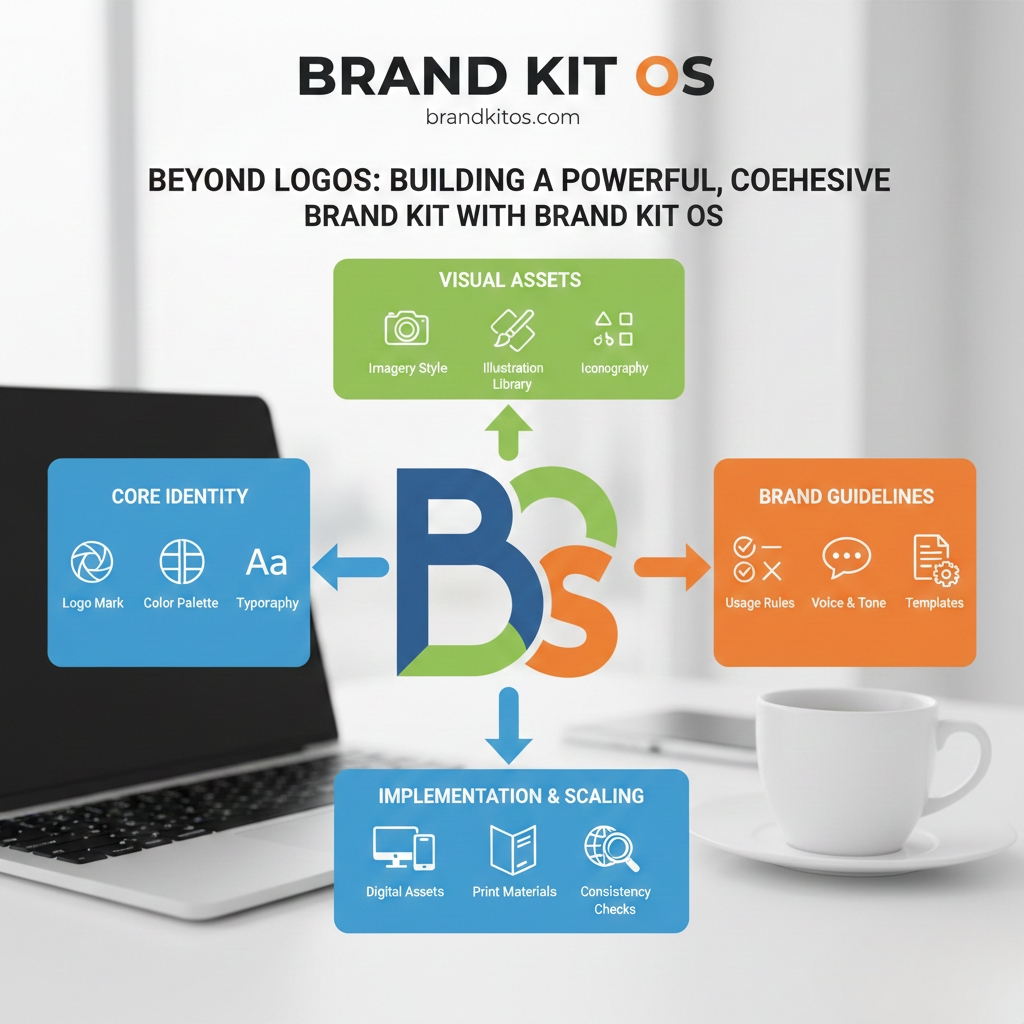
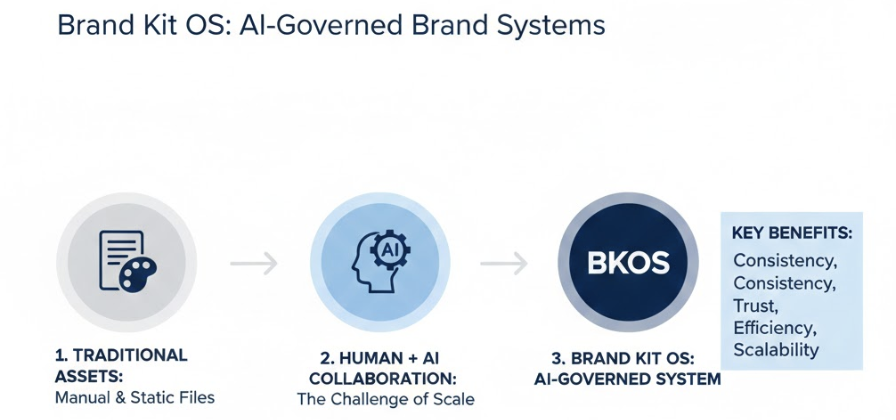
In today’s competitive market, brand identity extends far beyond a recognizable logo. Brand Kit OS redefines modern branding by transforming visual assets, messaging, and governance into a unified, scalable system. Designed as a complete brand kit for business, it supports growing organizations, startups, and enterprises that need consistency at scale.
By providing practical brand kit examples and a fully structured digital brand kit, Brand Kit OS helps organizations strengthen perception, build trust, and ensure consistency across every digital and physical touchpoint. While many companies still limit branding to colors and logos, enterprise-ready branding demands a structured framework that aligns design, messaging, and operational enforcement—especially in an AI-driven content landscape.
As an AI-powered brand management tool, Brand Kit OS bridges the gap between creative direction and execution, helping brands stay consistent even as content volume increases.
Why a Brand Kit Matters
A brand kit is more than a collection of visuals; it is a strategic blueprint for presenting your organization consistently. Whether you are a growing startup, an established enterprise, or a brand kit for SaaS companies, standardized brand systems ensure clarity across every interaction.
By establishing standards across logos, typography, color palettes, imagery, and messaging, businesses create a reliable identity that resonates with audiences. For companies serious about long-term growth, a brand kit is an essential foundation—especially when paired with a brand builder AI that helps guide content creation and brand compliance.
A comprehensive brand kit delivers three key benefits:
Visual Identity Consistency – Ensures uniform application of colors, fonts, logos, and imagery.
Messaging Clarity – Maintains a coherent voice and tone across all channels.
Operational Efficiency – Provides actionable rules for internal teams and external partners.
Without these elements, brands risk inconsistencies that can dilute perception and weaken audience trust.
Components of a Cohesive Brand Kit
Visual Identity Standards
Visual identity is the most recognizable part of a brand kit, but it is only the starting point. Brand Kit OS emphasizes a complete visual framework that includes:
Logo Variations & Usage Rules – Guidelines for different applications, spacing, and adaptations
Color Palette – Primary and secondary colors with precise codes for print and digital media
Typography System – Recommended typefaces, hierarchy, and usage rules
Imagery Style – Photography and graphics that reflect brand personality and tone
Consistency in visual identity ensures instant recognition. When users encounter your brand across multiple platforms, the visual language should be unmistakable.
Messaging Architecture
A cohesive brand kit must also define verbal identity—the way a brand communicates. This is where Brand Kit OS functions as both a brand system and a brand builder AI, helping teams align messaging across channels.
Key elements include:
Brand Voice Guidelines – Define tone, style, and personality
Key Taglines & Value Statements – Clearly communicate brand purpose
Approved Vocabulary – Maintain consistency in terminology and phrasing
Messaging architecture ensures every piece of content speaks with one voice, reinforcing trust and credibility.
Governance and Implementation
A brand kit’s effectiveness depends on structured governance. Brand Kit OS operates as dynamic brand guidelines software, ensuring brand rules are not just documented but actively enforced.
Governance features include:
Asset Access & Version Control – Ensures correct assets are always used
Approval Workflows – Streamlined review processes for brand materials
Application Standards – Clear rules for executing the brand across platforms
This governance-first approach is especially valuable for distributed teams and SaaS organizations managing high content velocity.
Leveraging AI for Brand Consistency
As businesses scale, manual enforcement of brand standards becomes unsustainable. Brand Kit OS integrates AI-driven systems that help maintain consistency across text, visuals, and tone.
Examples include:
Automated Content Evaluation – Detects messaging that deviates from approved guidelines
Visual Consistency Checks – Analyzes imagery and color usage
Real-Time Brand Guidance – Provides corrective suggestions before content is published
This makes Brand Kit OS a powerful AI-powered brand management tool for modern teams.
Practical Steps to Build Your Brand Kit with Brand Kit OS
Conduct a brand audit to identify inconsistencies
Define core visual and messaging elements
Implement governance using Brand Kit OS
Train teams and partners on brand standards
Monitor, refine, and scale your brand system
These steps help transform your brand kit into a living system that evolves with your business.
Conclusion
A brand kit is no longer just a visual reference—it is a strategic framework for how a brand should look, sound, and behave across every touchpoint. With Brand Kit OS, organizations gain a scalable brand kit for business, purpose-built for modern teams, SaaS companies, and fast-growing brands.
By combining AI guidance, governance controls, and dynamic brand guidelines software, Brand Kit OS enables consistent brand execution without slowing creativity. For organizations ready to elevate their brand identity, explore more about building and managing cohesive brand systems at Brand Kit OS.